What the Most Remote Island on Earth Taught Me About Challenge: The EGG
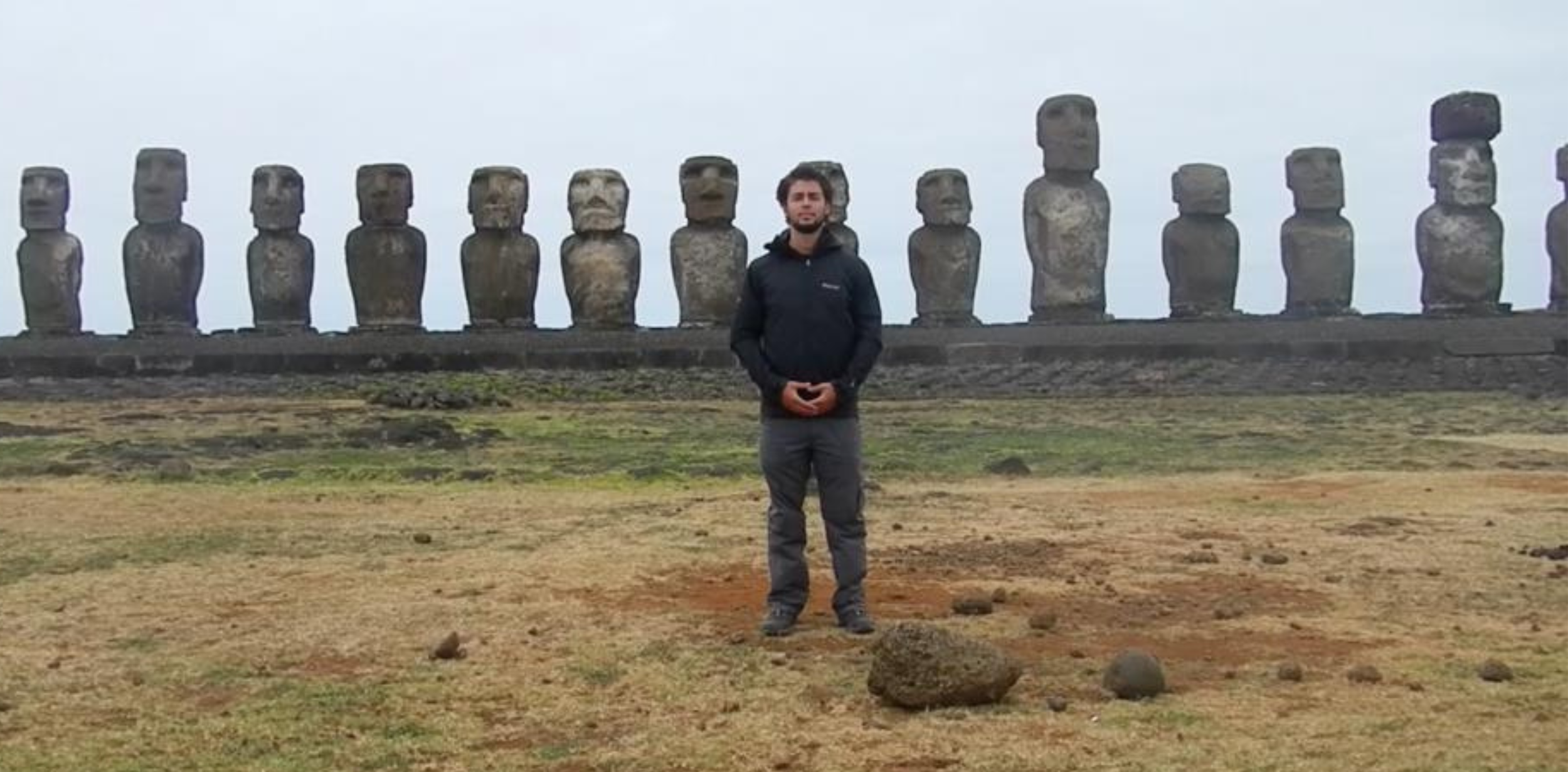
Rapa Nui, Chile
Over fifteen years ago, I was managing a strength and conditioning facility that did incredible work, and we were about to expand to multiple locations, but something inside of me was not sitting right. By most reasonable measures, things were going well. I had always enjoyed supporting people and athletes to get faster, stronger, and bigger, but what I really loved was the human connection between the sets and reps. I wanted to understand what actually makes people healthy and happy, not from a textbook but from the cultures that had been working on that question for centuries before anyone was handing out certifications for it. So I did what made sense to me at the time in my 20’s and very little sense to anyone around me: I saved what I could, packed a bag, and left all sense of security to find out.
One of the places that year took me was the most remote inhabited island on the planet.
The Island at the End of the World
Easter Island, or Rapa Nui as the people there call it, sits alone in the South Pacific roughly 3,700 kilometres from the coast of Chile. There is nowhere on Earth more isolated that people have chosen to live. The plane lands on a runway that cuts across the island, touching down on one end and stopping at the other, which tells you something about the scale of the place. I rented a moped and spent five days moving around with no fixed plan, just the road and wherever it went.
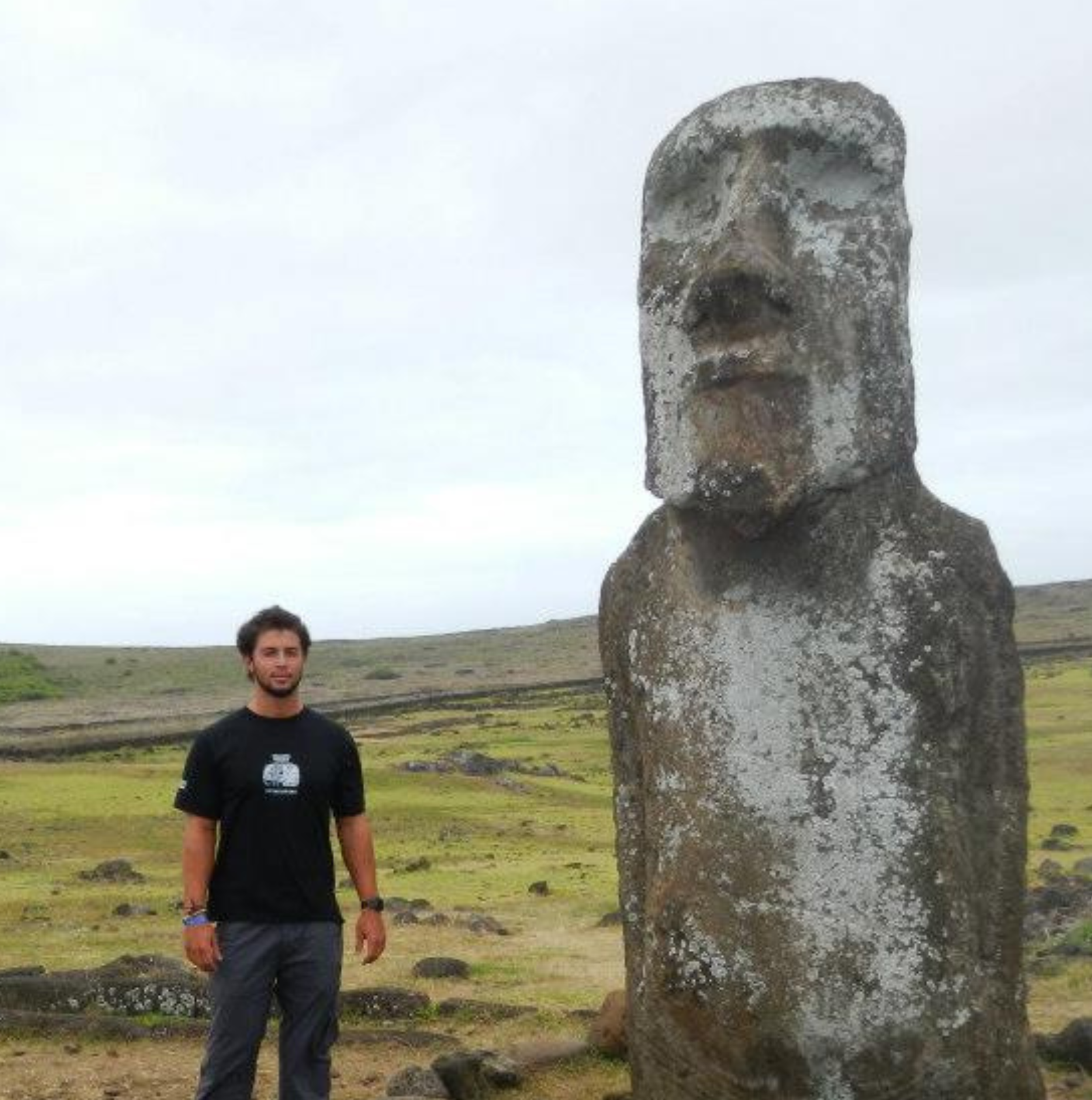
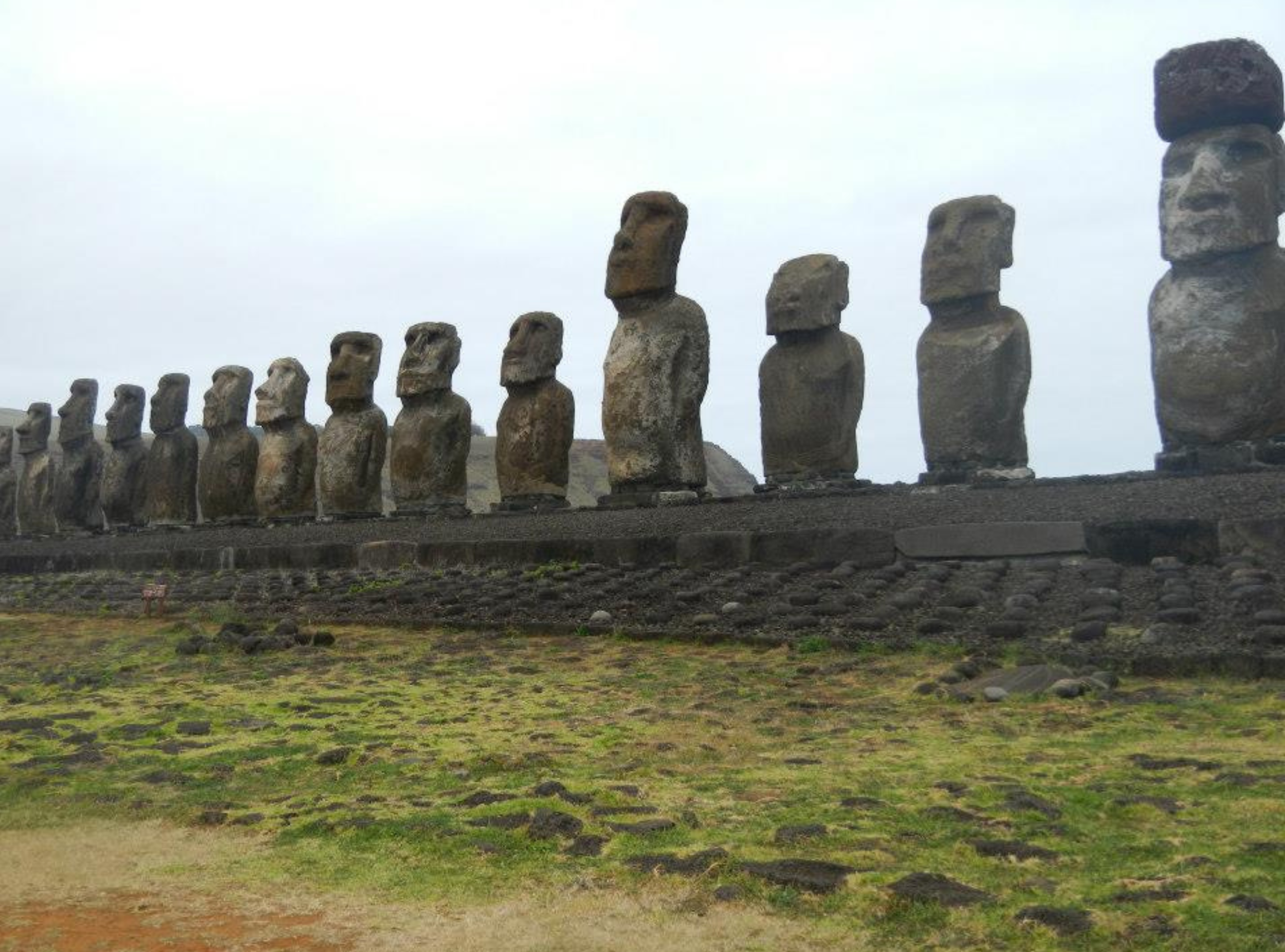
The moai are the first thing most people think of when they hear Easter Island, those enormous stone figures, some of them nearly ten metres tall, standing on platforms along the coast with their backs to the ocean and their hollow eyes looking inward toward the living. There is something about being watched by ancestors who have been standing in the same place for a thousand years that rearranges your sense of time. You feel very recent, very small, and for a while your own concerns go quiet. Dacher Keltner at UC Berkeley calls this the "small self," the measurable psychological shift that happens when people encounter something vast enough to overwhelm their frame of reference, and his research has found that it makes people more generous, more ethical, more inclined to see themselves as part of something larger than their own story. I did not have that language standing in front of those statues, but I had the feeling, and I kept stopping the moped to look at them, trying to understand what kind of society builds something like that and what it costs.
What I eventually found on the south-western tip of the island was not on any list I had been given. I rode out to a place called Orongo because someone mentioned it in passing, and I am glad they did.
The Cliff
Orongo sits on a narrow ridge at the crown of an extinct volcano called Rano Kau, with the deep still bowl of the crater on one side and, on the other, a cliff dropping almost three hundred metres of sheer black volcanic rock straight into the Pacific. I stood at the edge for a long time, long enough that the wind stopped being something I was noticing and became something I was just inside of, and I remember looking down at the rocks far below and having a very specific physical sensation: they did not care. There was no margin in that landscape, no forgiveness built into the geology, no version of that drop that would be okay.
What I did not know yet, standing there, was that I was standing at the starting line of one of the most extraordinary competitions in human history, and that this cliff had been chosen precisely because of how little it cared.
Before the Birdman
The competition did not emerge from nowhere. For centuries, leadership on the island passed through bloodlines, and the moai were expressions of that system, not just sculptures but materialized ancestral power, the dead legitimizing the living. But forests were being cleared, resources were thinning, and when inherited authority could no longer hold, the default was warfare. On an island this isolated, that was a trajectory toward extinction.
The people needed a different answer, and they found it in a bird. The manutara, a sooty tern, was sacred on the island, understood as a messenger between the spirit world in the sea and the living world on land. Around the 17th century, the Rapa Nui built a competition entirely around its return.
The Ordeal
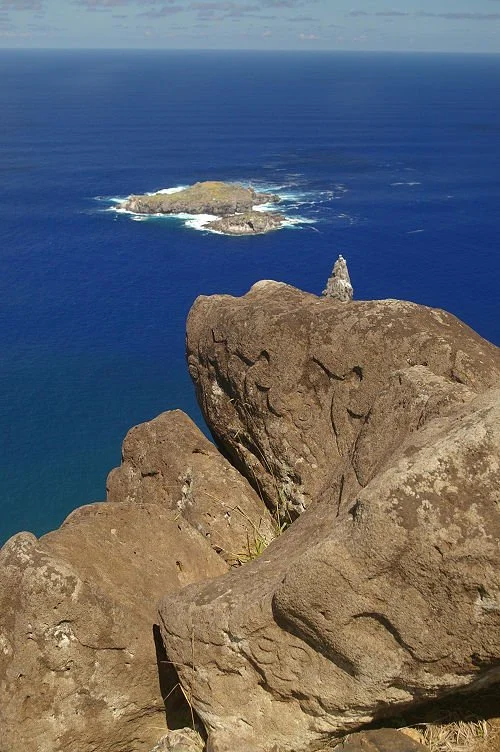
Every spring, when the manutara came back to nest on Motu Nui, a small islet roughly two kilometres off the coast, the competition began. Tribal chiefs sent their chosen representatives, young men called hopu manu, to compete on their behalf. These men had to be young, strong, and possessed of a particular kind of courage, not the absence of fear but the willingness to go anyway. They gathered at those stone houses on the narrow ridge above the cliff and waited for the signal.
When it came, they went over the edge. They descended nearly three hundred metres of jagged volcanic rock and threw themselves into the sea, swimming roughly two kilometres through open Pacific water with strong currents and sharks. On reaching Motu Nui they did not immediately return. They waited in crude shelters, sometimes for weeks, until the manutara laid its first egg of the season. The first man to secure one then faced everything again in reverse: the swim back, the cliff ascent, and the task of delivering the egg, carried in a small reed basket strapped to his forehead, unbroken. In some years, nearly all competitors perished.
When the successful hopu manu reached the clifftop and presented the egg to his chief, it was the chief, not the swimmer, who was declared Tangata Manu: the Birdman, earthly embodiment of the creator god Makemake. His head was shaved and painted in red and white. He withdrew into a year of sacred seclusion while his clan held sole rights over that season's harvest. The highest authority on the island, renewed each year, not passed down through blood but earned through an egg delivered intact from the other side of the sea.
When I eventually pieced together the full story, from conversations on the island, from reading, from standing in front of the carved birdman petroglyphs etched into the rock right at the cliff's edge, I kept returning to the same thought. A man leaves the known world, crosses into a place where ordinary life is not possible, waits there until the sacred thing appears, and returns carrying evidence of having been somewhere the others have not. By the time he reaches the clifftop, he is no longer who he was when he left. I did not learn until later that the anthropologist Arnold van Gennep had already given this structure a name in 1909, separation, ordeal, reincorporation, and that he had found it repeated across an enormous range of human cultures. But standing at Orongo, I could feel it before I could cite it, and what struck me then and still strikes me now is that most modern versions of this structure have been sanded down to something symbolic. The Tangata Manu was not symbolic. The transformation was real because the risk was real, and that is the part I think we quietly get wrong.
What the Rapa Nui understood, with a clarity that still strikes me, is that the ordeal cannot be symbolic if the transformation is meant to be genuine. The threshold has to cost something. Men did not fail the Birdman competition in a metaphorical sense, and the cliff was not pretending. I want to be careful here because suffering for its own sake produces trauma, not transformation, and the distinction that matters is intention: what does a person mean to create from the experience? But the intention has to meet a challenge that is actually hard, hard enough that the outcome is genuinely uncertain, hard enough that completing it produces what Albert Bandura called a mastery experience, evidence about yourself that thinking alone cannot manufacture and that no amount of encouragement from the outside can replicate.
A Smarter Way to Fight
Remember that before this competition existed, the alternative was war. Clans fighting, people dying, on an island that could not afford the losses. The Tangata Manu was not a negotiated peace or a political compromise. It was a redesign of the entire question. Leadership would be decided by the cosmos: each clan would send a representative, the first egg would decide it. The result carried divine sanction because the gods had spoken through the manutara, which meant the losing clans were not defeated by their enemies but by the gods, and you can live with that in a way you cannot live with a spear.
The Rapa Nui did not just understand what challenges do to individuals. They understood what they do to communities. They institutionalized difficulty as the basis of legitimate authority, and that is a profoundly different proposition from anything most modern societies have tried. You could not inherit the right to lead or buy it or claim it by bloodline. You had to earn it, annually, through the body of a man willing to go into the sea, and the whole community had to watch. There is something in that collective witnessing of genuine risk that made the result binding, and there is something in it worth sitting with.
The competition lasted roughly two centuries before collapsing on both sides. From within, winning clans began rigging the system they had built, refusing to relinquish privileges, excluding rivals. From outside, Peruvian slave raids in the 1860s took thousands of Rapa Nui, including most of the priests who held the ritual knowledge. A smallpox epidemic followed, and by 1877, the population had collapsed to barely a hundred people.
I rode away from Orongo as the light was going golden across the island, with many more months of travel ahead and no clean answer to the question I had left home to ask. But something about that cliff settled into me in a way that other places on that trip had not, and it has stayed.
You can understand your story with great sophistication and still be living inside it. What I took from Rapa Nui, and what I have seen confirmed in my work since, is that the rewriting has to happen through the body, through doing something hard where the outcome is genuinely uncertain, hard enough that completing it gives your nervous system evidence about who you are that thinking alone cannot manufacture.
That is what those hundred carved birdmen at Orongo actually are, not trophies but a record of a civilization’s long wager that authority has to cost something real and that the cost has to be witnessed.
My question to you is this: Where in your life have you confused the absence of difficulty with the presence of safety?
- Mike
References:
Bandura, A. (1977). Self-efficacy: Toward a unifying theory of behavioral change. Psychological Review, 84(2), 191–215.
Keltner, D., & Haidt, J. (2003). Approaching awe, a moral, spiritual, and aesthetic emotion. Cognition and Emotion, 17(2), 297–314.
Routledge, K. (1919). The Mystery of Easter Island. Hazell, Watson and Viney.
van Gennep, A. (1909). The rites of passage. University of Chicago Press.