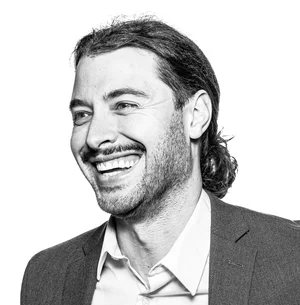
The Thing We Stopped Doing: (Wilderness, Rites of Passage, and What Modern Life Struggles to Provide)
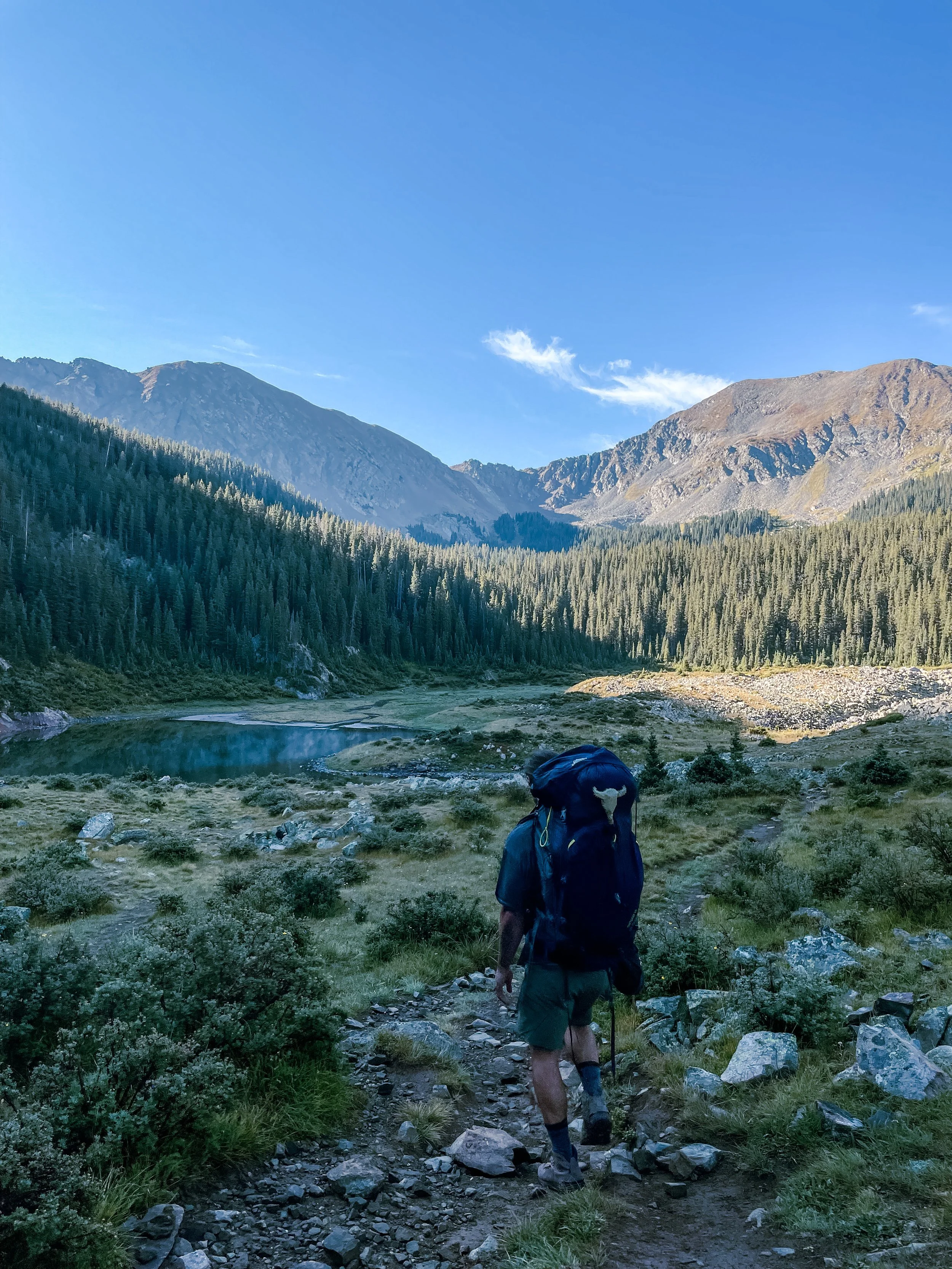
Over five years ago, I sat in a mountain meadow in New Mexico at about 11,500 feet with four gallons of water, warm clothes, a sleeping bag, a tarp with no tent, matches, and a homemade rattler made from animal skin and beans tied with sinew. No phone, no computer, no journal, no music, no books, no food, no chair, and whatever was happening in my head, which turned out to be a lot. I was there for four days on a water fast as part of a wilderness quest guided by my mentor Mike Bodkin, who has been leading quests for 40 years, based on the understanding that humans have always gone into wild places to mark transitions, face themselves, and come back changed.
I did not know exactly what I was signing up for when I went out there, although I did have a six-month preparatory course beforehand. I think the point was the journey into the unknown. Mike explained many aspects of pancultural emotional evolution, and one that stuck with me relates to the Four Cardinal Directions, which serve as a map for emotional maturity and evolution across a human life. The East represents the first place, the very beginning, the energy of early childhood, where everything is new, and you are just arriving. The South carries the energy of adolescence and ego, the me-me-me phase, where you are building an identity and figuring out who you are in relation to the world. The West is the dark night of the soul, the wicked witch archetype, the place where you face what you have been avoiding and where the stories you have been telling yourself about who you are start to break down. And the North is your true north, the vision you carry for yourself and the world once you have been through the fire. Then you return back to the East with great wisdom in elderhood. The idea, and this is the part that most people do not want to hear, is that if you want to get to your true north, a deep, fulfilling meaning and vision for life, you have to go through the West. There is no shortcut around the dark part, only through.
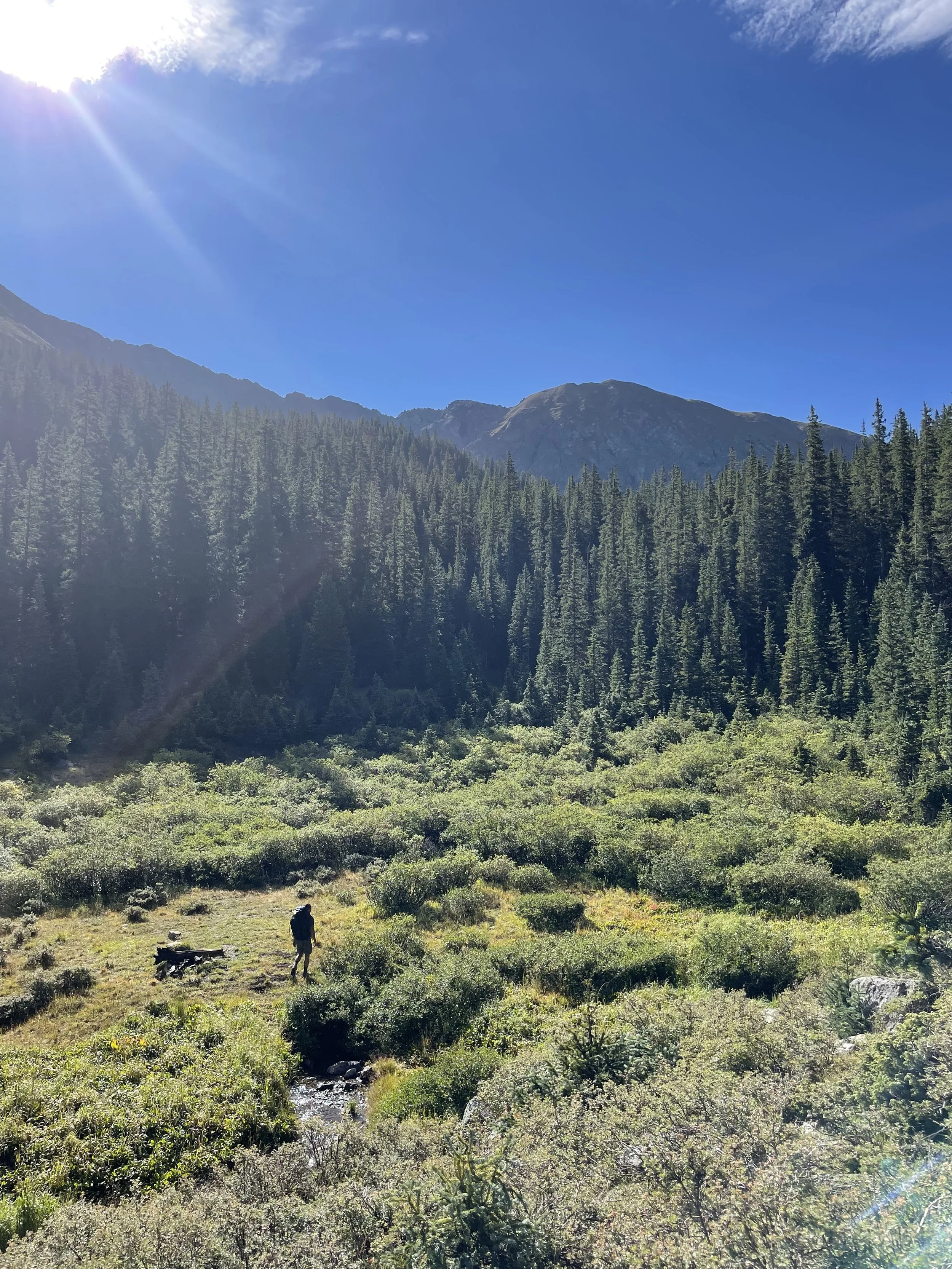
The way Mike's lineage teaches this is through communing with the natural world in wild places where the usual distractions and comforts are stripped away, and what I can tell you is that the stripping does not happen all at once. It happens in layers, one day at a time, and each day takes you somewhere deeper than the one before.
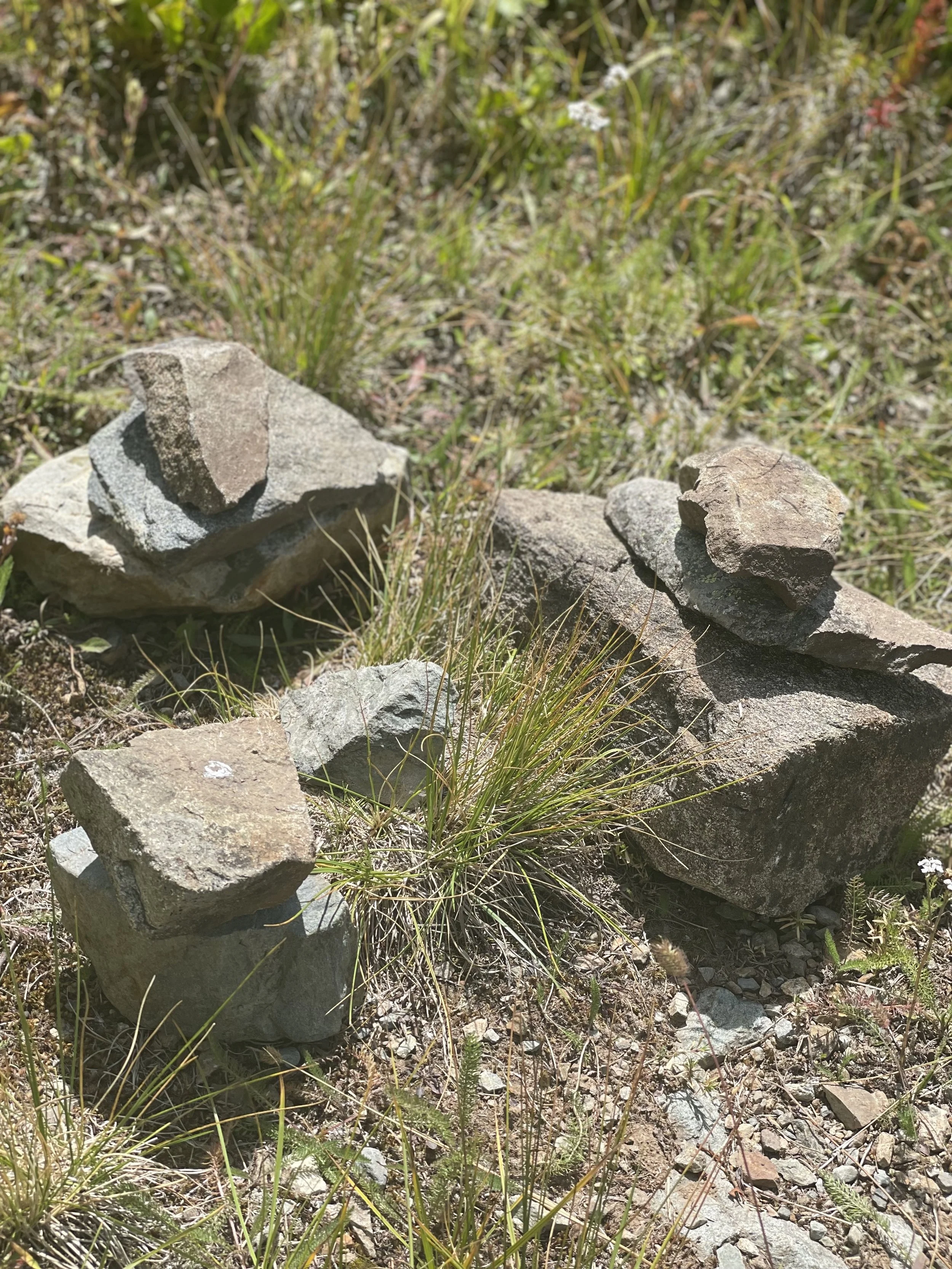
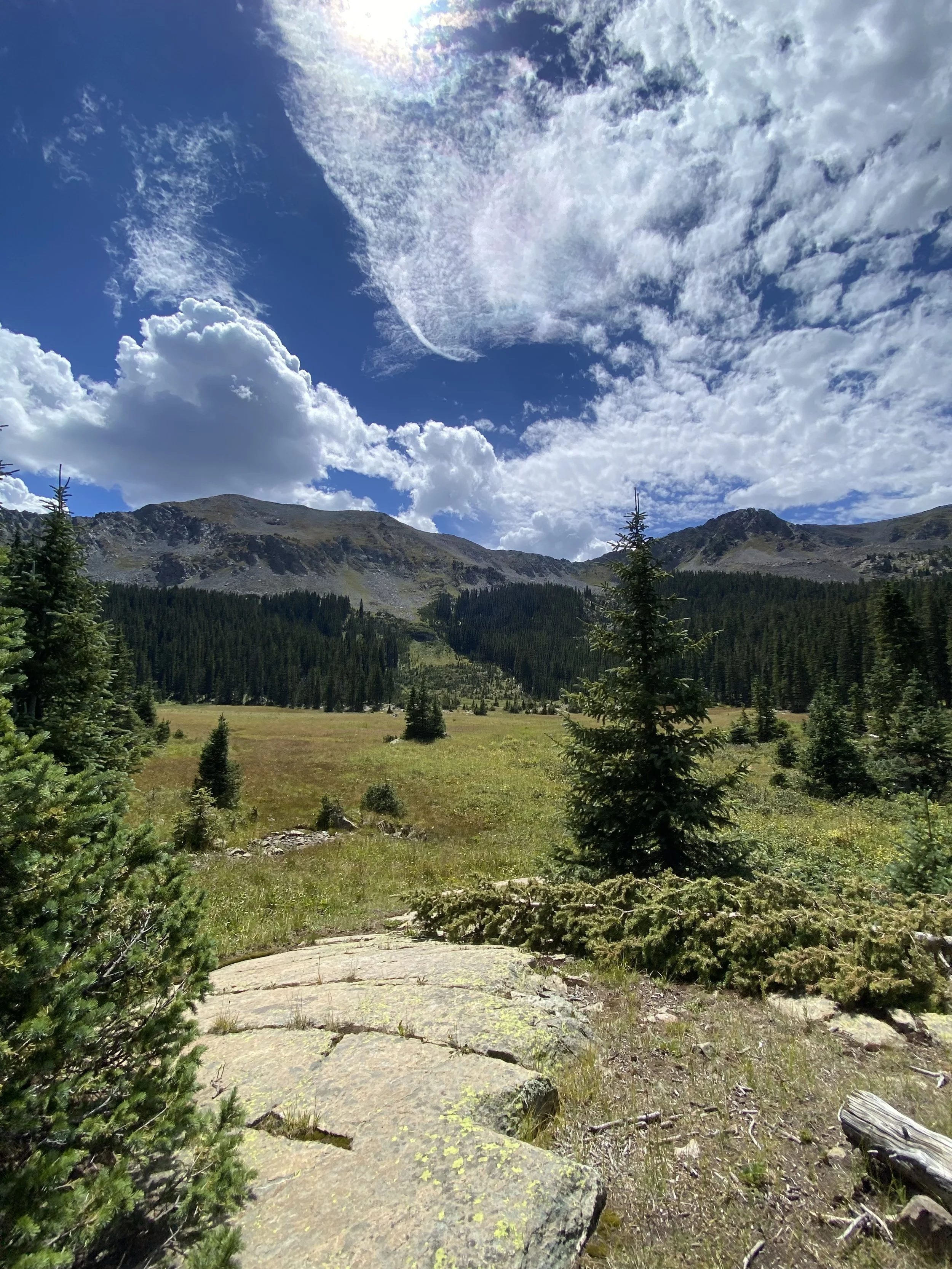
The first day I mostly noticed what was missing. No notifications, no obligations, no one to perform for, no structure to organize my time around. I walked and sat and drank water and tried to figure out what I was supposed to be doing, which of course was the point, because the answer was nothing. I remember watching the clouds move fast across the meadow with the 13,000-foot peaks engulfing me on all sides, and at some point in the afternoon I found a flat rock in the sun and fell asleep on it, which sounds unremarkable except that I cannot remember the last time I had fallen asleep outside in the middle of the day with absolutely nothing pulling me somewhere else. Each day I would hike to a rock less than a mile from my spot and stack a stone on top of it, and each afternoon my partner Kelly would hike to it from another direction and remove the stone. That was our safety check. If the stone was not moved, she knew where to come find me. We never saw each other during those four days, but that rock served as our communication, and there was something about the simplicity of it, two people connected through stones in the forest, that felt more honest than most of the ways we communicate in ordinary life.
The second day the restlessness started to soften, and I found myself paying attention to things I would normally walk right past. I spent a long time watching a fallen tree that was slowly being reclaimed by the earth around it, the bark loosening and the moss working its way in and the whole thing quietly becoming soil again. There is something about watching that process, a tree that was once standing and alive now horizontal and returning to the ground it grew from, that rearranges how you think about your own cycles of growth and collapse and renewal. The mountain was full of that kind of teaching if you were still enough to notice it, the way water finds its path without forcing anything, the way the aspens grow in connected groves because their root systems are one organism underground, the way the oldest bristlecone pines survive not by being the tallest or the strongest but by being the most willing to endure.
On the second night I enacted a death lodge, which was a multi-hour ceremony under the night sky where aspects of my life were invited that are no longer serving the person I was becoming. Old stories I needed to let go of, people I needed to forgive. It was a transformative experience that will live inside my mind (more on that later).
By the third day the noise in my head had quieted to the point where the things I had been running from started to show up. And they did not show up gently. They showed up the way they actually are, which is usually bigger and more honest than you are prepared for, because there is nothing between you and the experience, no screen or schedule or conversation to redirect your attention, no meal to prepare or task to complete, just you and the mountain and whatever your mind decides to surface. At one point I found myself on my hands and knees screaming into the earth with my face covered in dirt, asking her to hold what she has held forever so that I would not have to carry it by myself anymore. It was not a decision I made. It was something that came through me, and what I realized in that moment was that the help I was asking for had always been available, that the earth has been holding people's grief and weight and prayers since long before I showed up, and that asking for help was not weakness but the most honest thing I had done in years.
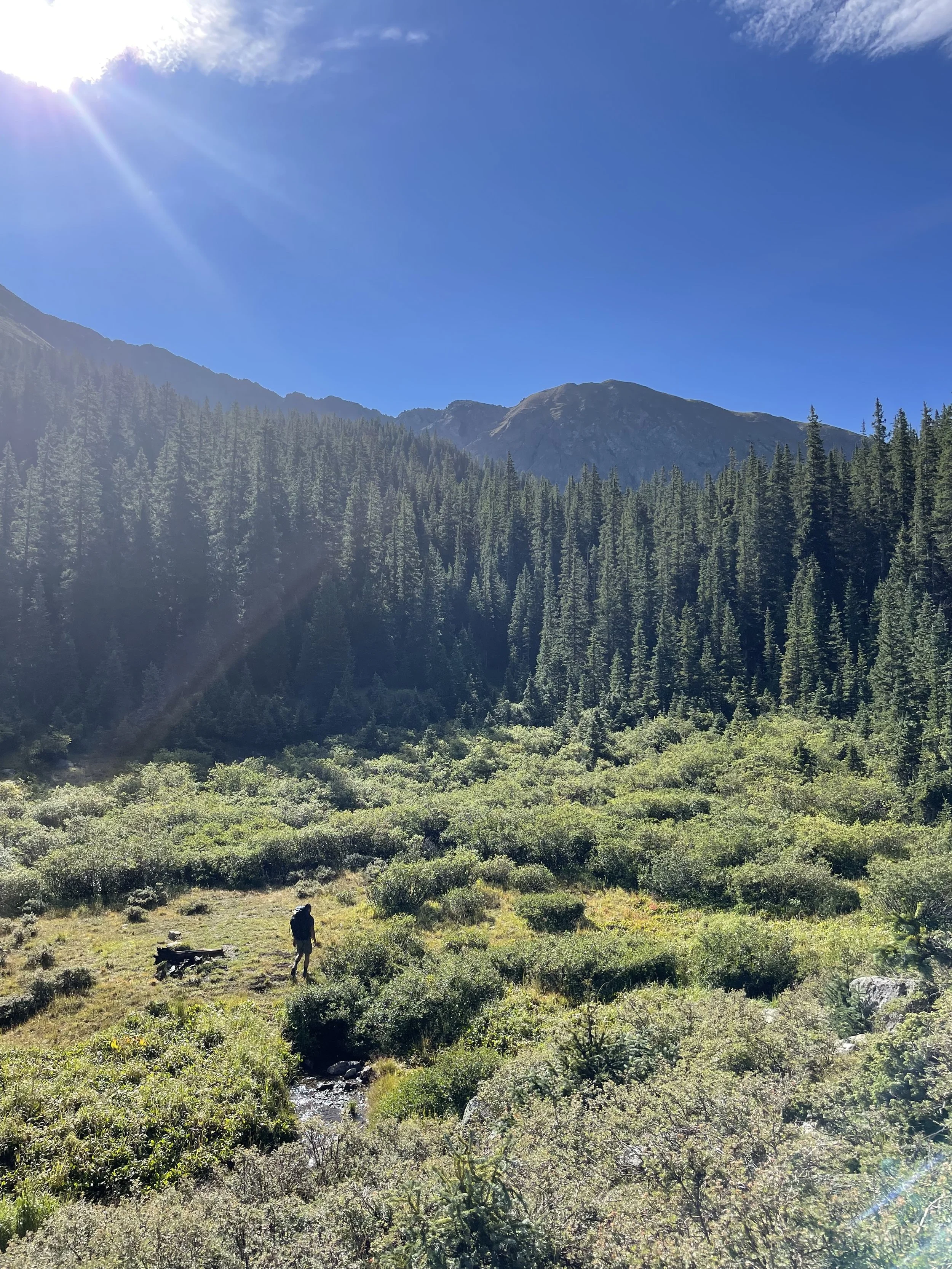
The last night was the all-night vigil, which is exactly what it sounds like: you stay awake from sundown to sunrise. I hiked up to a peak above 13,000 feet, and partway through the night a rainstorm moved in that I did not see coming. I ended up underneath a rugged sagebrush, soaking wet and freezing, watching lightning crack across the sky and wondering what exactly I had signed up for. And I think that was the moment the quest actually started working on me, because there was nowhere to go and nothing to do and no way to make myself more comfortable, and the only option was to stay there and feel all of it, wrapped inside of my tarp. The cold, the fear, the absurdity, the strange beauty of a storm at altitude in the middle of the night when you have not eaten in nearly four days and you are completely alone. Something in me stopped resisting and started paying attention, and what came through in those hours before dawn was not a thought or an idea but something closer to a knowing that I did not have language for at the time and still struggle to put into words. I never felt in danger. I felt connected.
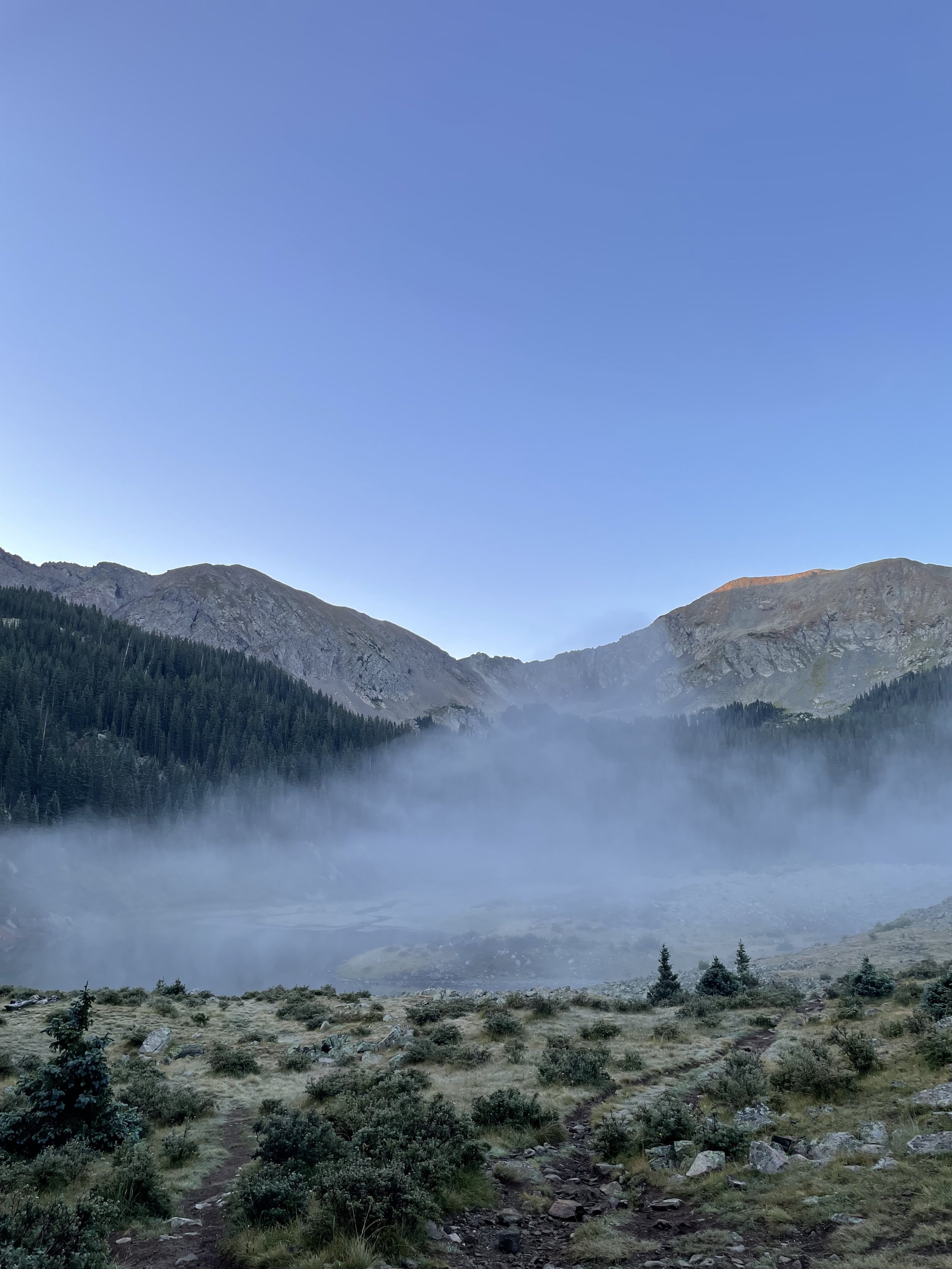
When I came off that mountain, I felt something I had never felt before and have struggled to describe since. The closest I can get is that it was like being plugged into the wild world in a way I did not know was possible. My eyes felt enormous, like they were taking in more information than they normally would, and my senses felt like superpowers, because every sound, every color, every shift in the wind registered with a vividness that bordered on overwhelming. It was a deeper connection to nature than I could have explained to anyone, and I think that is partly the point, that it has to be experienced rather than understood secondhand. I walked back into camp feeling like a different species than the person who had walked out four days earlier, and that feeling, while it softened over time, never fully went away.
One thing I want to be clear about is that a quest is not another challenge to check off, and it is not something you do every year the way you might sign up for a race or a retreat. It is not a physical challenge at all, really, well at least in the modern sense. It is a challenge of the soul, connected through everything by spirit, and the purpose of it is to help you grow from one area of yourself into another, to cross a threshold that changes what you see when you look at your own life. The endurance events I do, the ultras and the bike races and the world record attempts, those are physical challenges and I love them for what they teach me about my body and my will. But a quest operates at a completely different level. You do not conquer it. You let it land, and then you spend the rest of your life integrating what it showed you. The worst thing you could do with this kind of experience is turn it into another accomplishment, another story to tell at dinner, another escape from ordinary life dressed up as personal growth. It is not an escape from your life. It is a confrontation with the deepest parts of it.
You come off that mountain with a vision, and the vision is not something you manufacture or plan. It is something you earn through the trials and tribulations of your own mind out there in that wild place. I cannot speak to exactly what my vision was, and the reason for that is itself part of the teaching. I was taught that you do not share the deep details of what you experience on a quest, because every time you retell a sacred story you start to remember the telling rather than the experience itself, and eventually the story replaces the thing it was supposed to preserve. Your vision is not content to be distributed. It is something alive that you carry and protect, and the protecting is what keeps it working on you over time. I can explain what happened out there, the cold, the storm, the days of silence, because those are the facts of what occurred, but how those things solidified within me is between me and that mountain. What I can say is that it changed how I understood myself and what I was supposed to be doing with my life. And afterward I went on to complete a guiding training with Mike, learning the Four Directions framework and how to hold space for others going through this kind of work. That training was one of the most formative experiences of my life, not because of any single insight but because it connected me to a lineage of practice that humans have been engaged in for thousands of years and that most of us have completely lost access to.
That loss is what I want to talk about.
This Is Not New
What felt so singular to me on that mountain, the fasting, the solitude, the encounter with something I could not have accessed any other way, turns out to be one of the oldest patterns in human experience. The Lakota called it Hanbleceya, "crying for a vision," and it was understood as essential to becoming a full member of the community. The Australian Aboriginal walkabout sent adolescent boys into the wilderness for months, navigating by songlines that encoded both geographic knowledge and spiritual teaching. The ancient Greeks built the Eleusinian Mysteries around nine days of fasting and ritual that participants described as fundamentally transforming their understanding of life and death, and those ceremonies persisted for nearly two thousand years. Jesus went into the desert for forty days and forty nights, fasting and facing temptation alone before beginning his ministry, and that story has endured not because it is unique but because it describes a pattern that every culture seems to recognize: you go into the wilderness, you are stripped down to something essential, and you come back carrying something you could not have found any other way. Everywhere you look in the anthropological record, across cultures that had no contact with one another, you find the same structure: you leave the familiar world, you enter a space where you are stripped of your usual identity, you face something difficult, and you return to the community as someone who has been tested and transformed. The anthropologist Arnold van Gennep identified this three-phase pattern in 1909, calling the stages separation, liminality, and incorporation, and it has held up across virtually every cultural context researchers have examined since. The ordeal was not incidental to the transformation but the mechanism of it, and the community's role was equally important: the transition was witnessed, acknowledged, and celebrated, which meant the person could not quietly slide back into their old identity. They had been seen becoming someone new, and that seeing made it real.
What We Lost
Bill Plotkin, the depth psychologist and wilderness guide who founded the Animas Valley Institute in southwest Colorado, has spent over four decades arguing that Western industrial culture has essentially eliminated meaningful rites of passage, and that this elimination has left most adults stuck in what he calls an adolescent stage of development. Not adolescent in the insulting sense, but in the developmental sense: oriented primarily around ego, achievement, social status, and consumption rather than around soul, purpose, service, and deep relationship with the living world. His observation, developed across books like Soulcraft, Nature and the Human Soul, and Wild Mind, is that most people in Western culture never progress past the early stages of development because there are no cultural containers to facilitate the transitions. We have birthdays, graduations, weddings, and retirements, and while those are meaningful events, they are not ordeals. They are celebrations of continuity, not initiations into transformation. I see this in my coaching work more than I can count. I had a client who sold a successful business because he knew it was not the thing he was supposed to be doing, and the transition into work that was truly aligned with his soul was harder than he expected but more fulfilling than anything he had built before. He had been successful for years, but he had not been initiated into the version of himself that was willing to risk the comfortable thing for the real thing, and that difference is larger than most people realize.
Plotkin's work maps closely to the Four Directions framework I learned from Mike Bodkin, which is not surprising because both draw from the same deep well of understanding about how human development actually works when it is supported by nature and community rather than left to happen accidentally through the accumulation of birthdays. Both frameworks insist on the same uncomfortable truth: you cannot skip the hard part. The West, the descent, the dark night, the ordeal, whatever you want to call it, is not an obstacle on the way to maturity. It is where the transformation happens.
The contemporary research on nature-based therapy and wilderness interventions supports what both of them have been saying for decades and what indigenous cultures understood intuitively: the body and the emotions lead, and the mind follows. You do not think your way into a new identity. You feel your way into one, through experiences that are vivid, demanding, and real enough to bypass the stories your ego has been telling you about who you are. Albert Bandura's decades of research on self-efficacy found the same thing from a different angle: the strongest source of believing in your own capability is not encouragement or understanding but mastery experience, the actual lived experience of doing something hard and surviving it. When you have gone four days without food on a mountain at 11,000+ feet and you are still standing, your body knows something about your resilience that no amount of cognitive reframing could have taught it.
The Gap in Modern Life
I have started thinking of this not as an individual problem but as a cultural condition. When enough people are walking around with the same quiet sense that something important is missing despite having done everything they were supposed to do, the issue is not with the people. The issue is with what the culture stopped providing. Our ancestors built initiation into the fabric of community life because they understood that certain kinds of self-knowledge cannot be arrived at through accumulation or achievement. They can only be earned by going through something that fundamentally reorganizes how you see yourself, and that kind of experience used to be culturally guaranteed rather than left to chance.
We have replaced rites of passage with milestones, ordeals with achievements, and the witnessed, community-held transition from one stage of life to another with the quiet, private hope that we will somehow figure it out on our own. The result is a culture full of people who are, by Plotkin's developmental map, still waiting for an initiation that their culture forgot to provide.
The answer is not to romanticize indigenous traditions or to copy practices from cultures that are not ours. Plotkin is clear about this, and so was the School of Lost Borders: the impulse toward wilderness-based initiation is universal and belongs to all of us, but the specific form it takes needs to be appropriate to our time and place. What I believe, based on my own experience on that mountain and on years of guiding and coaching others through difficulty, is that this kind of work is not optional for people who want to live fully. It is the missing piece for people who have done everything they were told would make them feel whole and still feel like something fundamental is absent. The something that is absent is the ordeal, the witnessed transition, the going-through that earns you a new relationship with yourself.
The question is not whether you need this. The question is whether you are willing to go looking for it, and whether you trust yourself enough to step into the wild place where the familiar stories about who you are stop working and something truer has a chance to emerge.
Mike
I support a select few people in this type of work when it feels like the right fit. It is not for everyone, and it is not for every moment in a person's life, but when the timing is right and someone is genuinely ready to go through the West to get to their North, it can be one of the most important things they ever do.
Bandura, A. (1977). Self-efficacy: Toward a unifying theory of behavioral change. Psychological Review.
Foster, S. & Little, M. (1992). The Book of the Vision Quest: Personal Transformation in the Wilderness. Simon & Schuster.
Plotkin, B. (2003). Soulcraft: Crossing into the Mysteries of Nature and Psyche. New World Library.
Plotkin, B. (2008). Nature and the Human Soul: Cultivating Wholeness and Community in a Fragmented World. New World Library.
Plotkin, B. (2013). Wild Mind: A Field Guide to the Human Psyche. New World Library.
van Gennep, A. (1909). The Rites of Passage. University of Chicago Press.