Performance Coaching

The people who come to me are not the ones anyone would expect to need help. They are sharp, disciplined, and successful by every measure that shows up on a resume or at a dinner table, and they have built lives that work.

That is exactly why they stay stuck for so long, because when everything on the outside is working, the distance between where you are and where you know you could be turns into a problem you cannot explain to anyone else and one you start to wonder if you are even allowed to have.

What I have found, after fifteen years and hundreds of clients who fit that exact description, is that the problem is almost never what they think it is. It is not a discipline problem, or a motivation problem, or a problem that another book or podcast or productivity system is going to fix.

It is a story problem. The story they built their life around stopped being one they chose and became one they inherited, and no amount of optimization can close that gap because it only makes you better at living inside a story that may no longer fit.

What does close it is not more thinking. Most of the people I work with have already done plenty of thinking, they understand their patterns, they can articulate what is wrong, and they are still stuck. The gap closes when someone stops analyzing the old story and starts taking action that writes a new one.

The 60-80 Dilemma

I call it the 60-80 Dilemma because the people I work with are not starting from zero. They have already built something real. The career is moving, the health is decent, the relationships are functional, and yet somewhere in the honest hours, usually late at night or early in the morning before the day takes over, they can feel it: the distance between where they are operating and where they know they are capable of operating.

They start to wonder whether the problem is gratitude, ambition, or just what adult life feels like.

It is usually none of those things. What I have seen in my work, and what the research in positive psychology supports, is that the 60-80 Dilemma is a narrative problem. Somewhere along the way, the story you built your life around stopped being one you chose and became one you inherited, a set of "musts" and obligations and external expectations that calcified into autopilot. You are performing a version of yourself that used to fit, and the discomfort you feel is the distance between that performance and who you are actually becoming.

That gap does not close on its own, and the longer it sits, the more normal it starts to feel, which is the most dangerous part.

The Cost of Defense Mode

Most of the high-performing people I work with have spent years in what I think of as defense mode, a reactive posture where you are responding to demands rather than shaping outcomes. It is productive, and it is respectable, and it will quietly consume years of your life if you let it.

Defense mode starts every morning, responding to other people's priorities before you have touched your own. It is exercising when you can squeeze it in, without consistency or intention behind it. It is the ideas you have been sitting on for months, the ones that live in a notes app or the back of your mind, that never quite make it from analysis to action. It is maintaining relationships that look fine on the surface, while something deeper has gone quiet.

None of this feels like a crisis, and that is exactly why it persists. Defense mode does not announce itself as a problem. It just slowly removes the conditions that make you feel capable, engaged, and genuinely alive, and one day you realize you do not trust yourself the way you used to, and you cannot quite explain why. I have sat across from enough people in that exact moment to know that the cost is not dramatic. It is measured in the months and years you spend at 60-80% when you do not have to be.

If you are reading this and you know exactly what I am talking about, we need to talk.

Man running in a dry field with mountains and cloudy sky in the background.

The Shift to Offense

Playing offense is not about intensity for its own sake, and it is not about adding more to a life that already feels full. It is a reorientation from reacting to choosing, from managing the life you inherited to building the one you actually want.

In my coaching work, this starts with getting honest about the specific stories keeping someone stuck, not in the abstract, but in the actual texture of how they spend their days, what they avoid, and what they tell themselves about why things are the way they are. From there, we build forward. We get clear on what they actually want (not what they think they are supposed to want), we put real structure and accountability behind it, and then we move into action, because insight without action is just a more sophisticated way of staying in the same place.

I am a big believer in what I call embodied challenge, the idea that real change happens not just in your thinking but in your body, through chosen difficulty that produces evidence you cannot argue with. Albert Bandura's research at Stanford called this mastery experience: the most powerful source of self-belief is not encouragement or visualization, but the lived experience of doing something hard and not quitting. That is the kind of evidence that rewrites a story from the inside out, and it is central to how I work.

This is not motivational cheerleading, and it is not therapy. It is coaching grounded in positive psychology research from the University of Pennsylvania, informed by fifteen years of working with real people, and tested through my own ongoing relationship with difficulty.

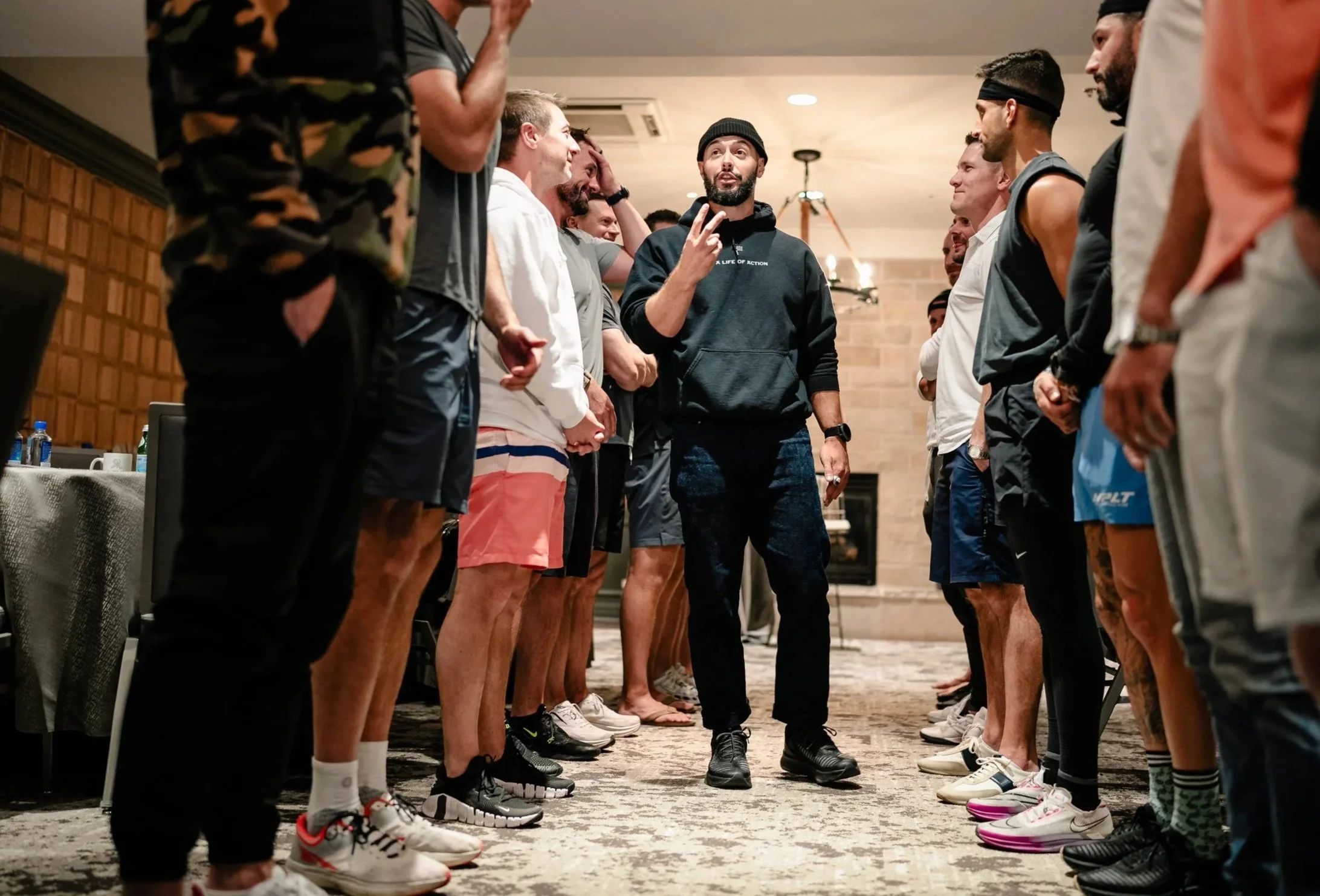
mike aidala leading a group mindset session for executives and founders at aspen retreat

Who You'll Work With

I founded The Offense because I spent years living inside a story I did not choose, doing what I thought I was supposed to instead of what I actually wanted, and I know firsthand what it costs to stay there and what it takes to leave. I have spent the last fifteen years coaching, completing ultramarathons, failing and succeeding at a Guinness World Record, and studying the science of well-being and human flourishing at the University of Pennsylvania, all because I believe you cannot credibly ask someone to step into difficulty if you are not still stepping into it yourself.

What Clients Experience

One client came to me with nothing on his calendar that he was looking forward to. Within a few months, he was bouldering weekly, had climbed a mountain in West Virginia, booked a ski trip with friends, and wrapped up his year with the highest income of his career. But more importantly, he had started asking what would actually make him come alive in his work rather than just performing well at it. The external results followed the internal shift, not the other way around.

Another came in wanting to improve one specific area of his life and ended up transforming how he communicates with everyone in it. He revitalized his relationship with his parents, ended a partnership that was not working with more honesty and maturity than he thought he was capable of, left a job he had been telling himself he was supposed to stay at, and took a four-month sabbatical to invest in himself. In his own words, the opportunities in front of him stopped feeling like obligations and started feeling like adventures he got to choose.

These are not unusual results. They are what tends to happen when someone gets clear on what they actually want, builds the tools to pursue it, and has someone in their corner who will not let them settle for less than they are capable of. The specifics vary by client, but the pattern is consistent: clarity on what matters most, stronger relationships built on honest communication, sustainable practices that fit into a demanding life, and the sense of being back in charge of the direction rather than just keeping up with the pace.

What Our Clients Say — Rated 5 Stars Across 65+ Google Reviews

"I'm 31. I've worked in finance for over a decade. I've questioned the 'value prop' of life and performance coaching for as long as I can remember. I took a chance because it seemed different than the others I'd glanced at. Different in the sense that it was less flashy, less cookie-cutter. It was quite possibly the best and luckiest decision I have ever made." — Jake F.

"Mike gave me the most important thing any life coach can give anyone: permission. Permission to have fun, to do self-care, and most importantly, permission to live the life that I want, not the life that I 'should.'" — Sarah H.

"I was scared and nervous about reaching out to Mike. Asking for help wasn't something I have done growing up. 8 weeks later my family and friends say that I am a completely different person mentally. The way I speak and the word choices I use are very strong and they say, 'I know what I want.'" — Mat F.

READ / WATCH MORE TESTIMONIALS

How We Work

My coaching approach is Socratic, which means I spend more time asking questions than giving answers. Not because I lack opinions (I have plenty, and I will share them), but because the most lasting change happens when you arrive at your own understanding rather than borrowing someone else's. Clients consistently describe this as what sets the work apart from anything else they have tried, including therapy.

I listen carefully, I challenge directly, and I hold you accountable to the things you say matter to you. The combination of warmth and push is intentional because I am not interested in being comfortable, and I am not interested in being harsh. I am interested in helping you close the gap between where you are and where you are capable of operating, and doing that in a way you can sustain long after our work together is finished. Every client leaves with a concrete set of tools and frameworks they can return to for years. This is not about creating dependence on a coaching relationship. It is about equipping you to keep building on your own.

What the Process Looks Like

Coaching starts with a free intro call where we talk about where you are, where you want to be, and whether The Offense is the right fit. There is no obligation and no pitch. If it is not the right fit, I will tell you, and if I think something else would serve you better, I will point you there.

From there, coaching runs over a structured engagement of several months, with regular one-on-one sessions conducted virtually. Between sessions, you work with specific tools, exercises, and frameworks tailored to what you are building toward. The work is focused and practical, not open-ended conversation. Every session moves something forward.

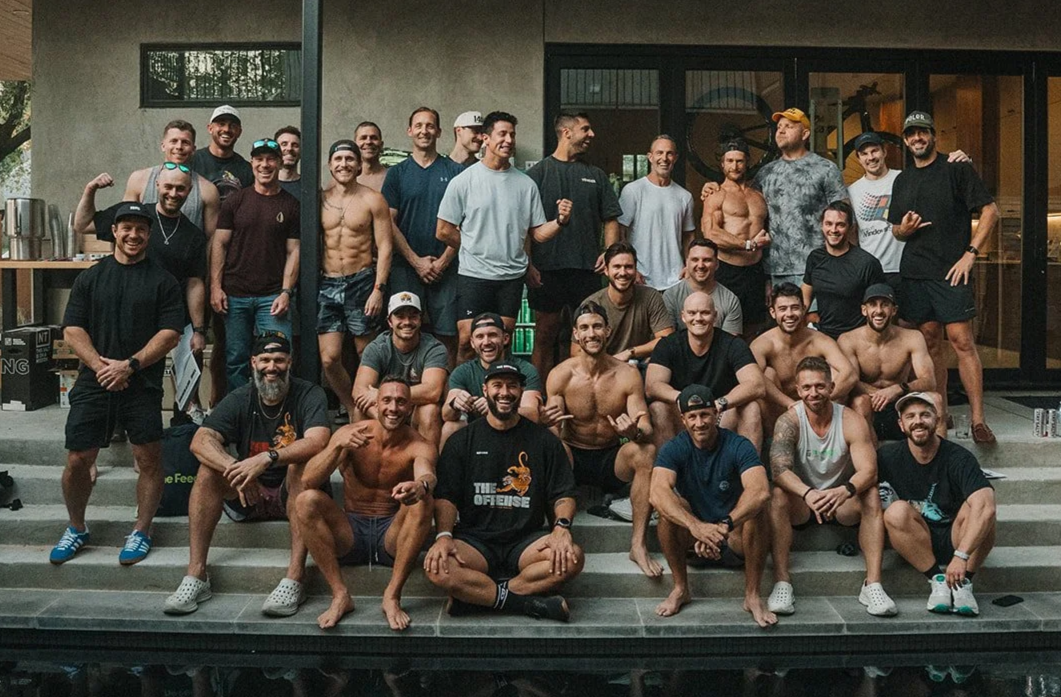
I also run group coaching programs for men, typically groups of about ten over six to eight weeks. These combine structured workshops with peer support and shared accountability, and many clients describe the experience of working alongside other men in similar situations as one of the most valuable parts of the entire process.

All coaching conversations are completely confidential. More detail on that in the FAQ section below.

The gap does not close on its own

I am not going to tell you that you were built for more, because you already know whether that is true. The people I work with are not looking for someone to convince them they have potential. They are looking for someone who will help them stop sitting on it.

The intro call is free, it is confidential, and it is a real conversation. I will ask you questions, you will tell me what is actually going on, and by the end of it you will have a clearer picture of the gap you are dealing with and what it would take to close it, whether or not you ever work with me. That is the promise.

If you are the right fit, I will tell you. If you are not, I will tell you that too.

You can’t WIN

If you don’t SCORE

“We don’t rise to the level of our expectations; we fall to the level of our training.”

- Archilochus, Greek Poet

 FAQs

  • Therapy and coaching serve different purposes, and we are clear about where the line is. Therapy tends to focus on processing past experiences, treating clinical conditions like depression or anxiety, and working through trauma with a licensed mental health professional. Coaching is forward-looking and action-oriented. We work with people who are already functioning well but recognize they are not operating at the level they are capable of, and we help them close that gap through clarity, accountability, and chosen challenge.

    That said, we take this distinction seriously. If someone comes to us and it becomes clear that what they need is clinical support, we will say so directly and help them find it. Coaching is not a substitute for therapy, and we would never pretend otherwise. For many of our clients, coaching and therapy serve complementary roles, and some work with both simultaneously.

  • Yes, but not because someone tells you what to do differently. The kind of change that lasts tends to come from understanding yourself more honestly, getting clear on what you actually want (not what you think you should want), and then building the practices and accountability to act on that clarity consistently. That is what coaching creates the space for.

    Most of our clients have already tried changing on their own. They have read the books, set the goals, maybe even made progress before sliding back. What tends to be missing is not information or willpower but someone who will ask the right questions, challenge the stories that keep them stuck, and hold them to what they said matters. Our clients consistently tell us that the tools they build during coaching are things they continue to use years later, which is the real measure of whether change sticks.

  • Socratic. We ask more than we tell. The reason is simple: if we hand you an answer, you might follow it for a while, but it will never feel like yours. If you arrive at your own understanding because someone asked the right question at the right time, that insight tends to stay.

    In practice, this means our coaching sessions are not lectures or pep talks. They are structured conversations where we listen carefully, identify patterns you may not be seeing, and challenge you to think more honestly about what is driving your decisions and what is holding you back. We combine that questioning approach with real warmth and genuine investment in your progress. Clients describe it as the balance of someone who clearly cares about you and will not let you off the hook at the same time.

    We also ground everything in research. The Offense is built on positive psychology from the University of Pennsylvania, and we believe that the most effective coaching connects real science to real action. You will never hear us give advice that sounds good but has nothing behind it.

  • Coaching sessions are typically 50 minutes per week. Between sessions, there are exercises, reflections, and tools to work with, but they are designed to fit inside the life you are already living, not to compete with it. Most of our clients are busy professionals with demanding schedules, and the structure of the coaching reflects that. The goal is to build practices that integrate into your week, not add another obligation on top of everything else.

  • That depends on what you bring to the work. Clients who show up consistently and engage honestly with the process between sessions tend to see meaningful shifts within the first few weeks, in how they think about their priorities, how they communicate with the people closest to them, and how they spend their time.

    Beyond that, the results tend to compound. Many of our clients come in focused on one area of their life and end up seeing changes across several, because the tools and frameworks apply broadly. Clarity on what you want tends to improve your relationships. Better communication tends to reduce the stress you carry at work. Physical consistency tends to build the kind of confidence that shows up everywhere else. The specifics look different for everyone, but the pattern is consistent: people leave coaching feeling like they are back in charge of their own life rather than just managing it.

  • Coaching sessions are conducted virtually, which allows us to work with clients regardless of location and makes it easier to maintain consistency in scheduling. That said, The Offense also offers group coaching programs and in-person events, including workshops and the monthly men's emotional fitness group. If in-person connection is important to you, there are ways to incorporate that into the experience.

  • Completely. Everything discussed in coaching stays between you and your coach. This is non-negotiable. The work we do requires honesty, and honesty requires trust that what you share will not go anywhere else. We take that seriously, and our clients will tell you that the sense of safety in our conversations is one of the things that makes the work possible.