The Conversations You Earn
Leadville 2023-2026
There are conversations you can only have with yourself at mile 80 of a hundred-mile race. I do not mean motivational self-talk or the mental tricks endurance athletes use to push through walls. I mean the stripped-down, nowhere-to-hide kind of conversation where every comfortable story you have ever told yourself about who you are either holds up or it does not. You cannot fake your way into those conversations. The only way you get there is by putting ninety miles of effort underneath you and seeing what is left.
I have been chasing those conversations in Leadville, Colorado for four years now, and I have not yet finished the race that would give me all of them. But what I have learned in the process is that the finishing was never really the point.
Hope Pass, 2023
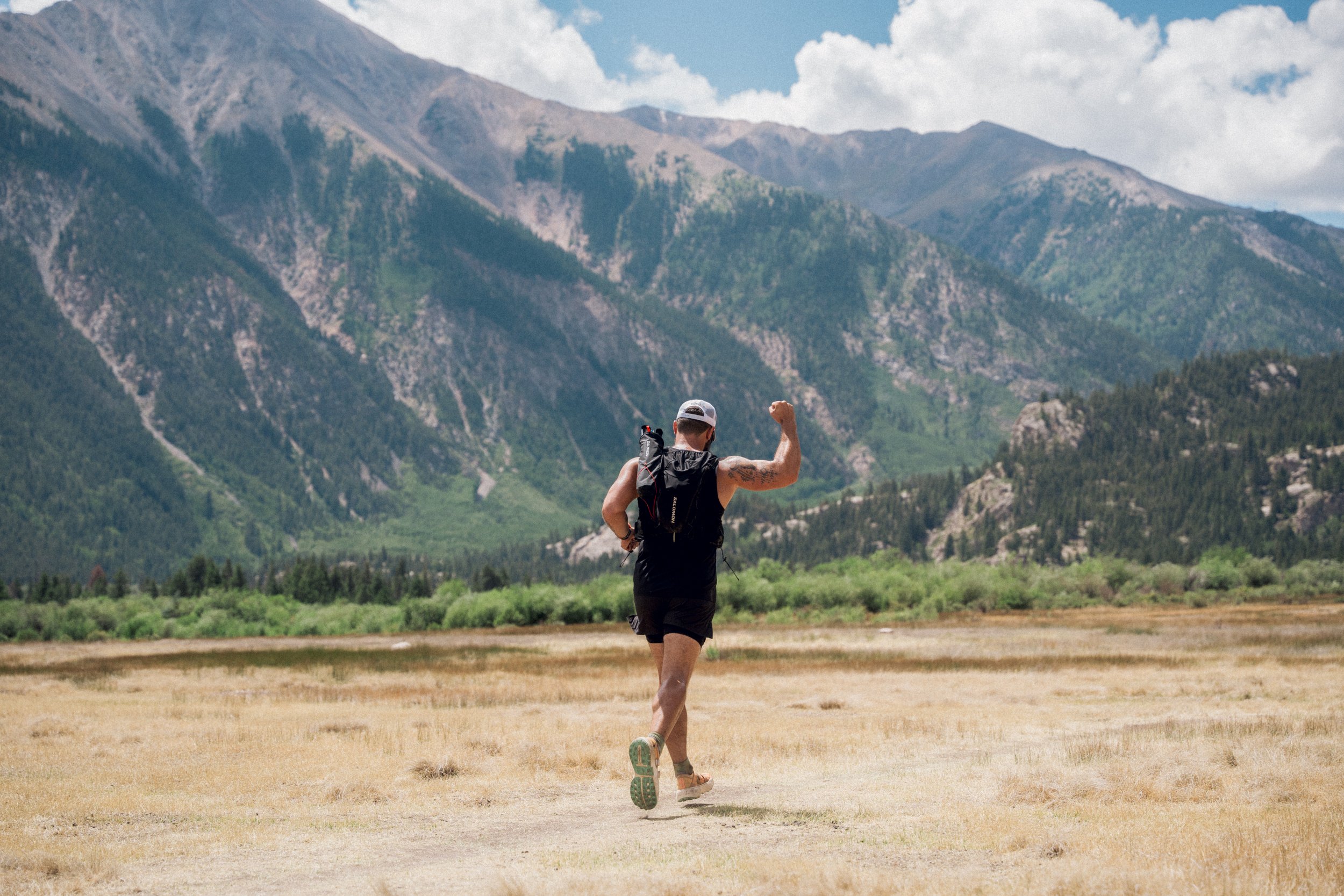
In 2023, I attempted the Leadville 100 trail run for the first time. Leadville is an old mining town in the Colorado Rockies that sits at just over 10,000 feet, and nearly the entire race is run above that elevation. The weather can go from eighty degrees and sunny to snowing in the same afternoon, the air is thin enough that your body never fully adjusts, and the course covers a hundred miles of mountain trails that have been humbling people since the race started in 1983. I was new to ultramarathons, which in hindsight explains a lot. The Leadville 100 is not a race you can will yourself through on enthusiasm alone, and the mountain does not care how badly you want it.
I made a pacing mistake early, spending too conservatively on the first half because I was trying to save something for the back end. By the time I reached the backside of Hope Pass at 12,500 feet, the kind of terrain where the grade is so steep your heels never touch the ground, I knew the math was not going to work. I was not going to make it back down into Twin Lakes before the time cutoff.
So I sat down. At 12,500 feet, somewhere on the backside of Hope, with my legs gone and my stomach turning and the sun just dropping below the ridgeline, I sat down and watched the first stars start to come through. It was freezing, and I still had at least six miles of big mountain ahead of me just to get off the course. But the race was over, and I knew it. I sat there and had a conversation with myself that I did not know I needed to have. It was not dramatic. There was no breakthrough or cinematic moment of resolve. It was just me, acknowledging that I had made it sixty-two miles into this thing, that I did not have enough in the tank to finish it, and that this was going to have to be enough for today. I got time-capped at mile sixty-two.
Most people would call that a failure, and by the technical definition of the word, it was. I did not finish the race. But something happened on that mountain that I did not expect, which is that the conversation I had with myself sitting on Hope Pass taught me more about my own capacity and my own limits than finishing would have. Finishing would have confirmed what I already believed. Not finishing forced me to look at the gap between what I wanted and what I had actually prepared for, and that gap became the blueprint for everything that came next. Two months later I went back and completed the Havalina 100, so I knew I could finish an ultra. But Leadville was a different animal, and I was not done with it.
The Lead Challenge, 2024
I came back the next year and signed up for something bigger. The Leadville Race Series offers what they call the Lead Challenge, which is a sequence of races over the course of the summer: a marathon, a fifty-mile trail run and a fifty-mile mountain bike on back-to-back days, a hundred-mile mountain bike, a 10K, and finally the hundred-mile trail run. You complete the full series within the time cutoffs and you earn a Lead Challenger belt buckle.
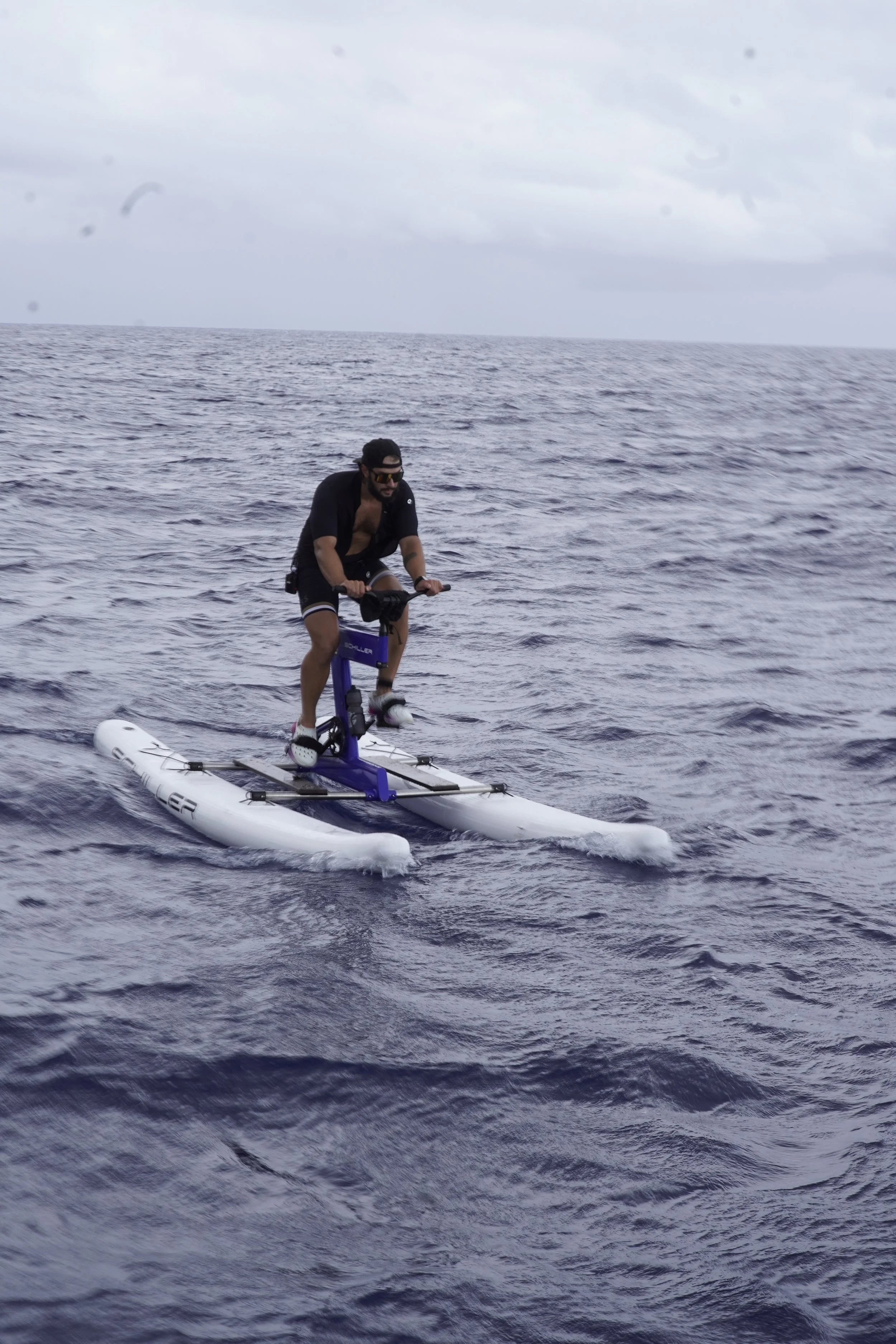
The week before the marathon in June I did something equally questionable: I rode a Schiller water bike from the Bahamas to Florida and flew straight back to Colorado to start the series. The marathon, the fifty-mile double weekend, the hundred-mile bike, the 10K, all of it building toward the hundred-mile run in August.
By the time I toed the line for the hundred-miler, I was a little sick from the mountain bike a few days earlier, and I could feel it from the first mile. That day became one long negotiation with time cutoffs, and the best way I can describe that feeling is this: imagine you are late for an appointment, and you are driving a little over the speed limit convinced that saving thirty seconds is going to make the difference, and the entire twenty minutes you are rushing and nervous and stressed instead of just relaxing and recognizing that thirty seconds is not going to matter. Now stretch that feeling across twelve hours and the second half of a hundred-mile trail run, and that is what chasing cutoffs feels like. You are doing math in your head at every aid station, calculating whether you have enough minutes to keep going before they pull you off the course, and the anxiety of being behind never lets up.
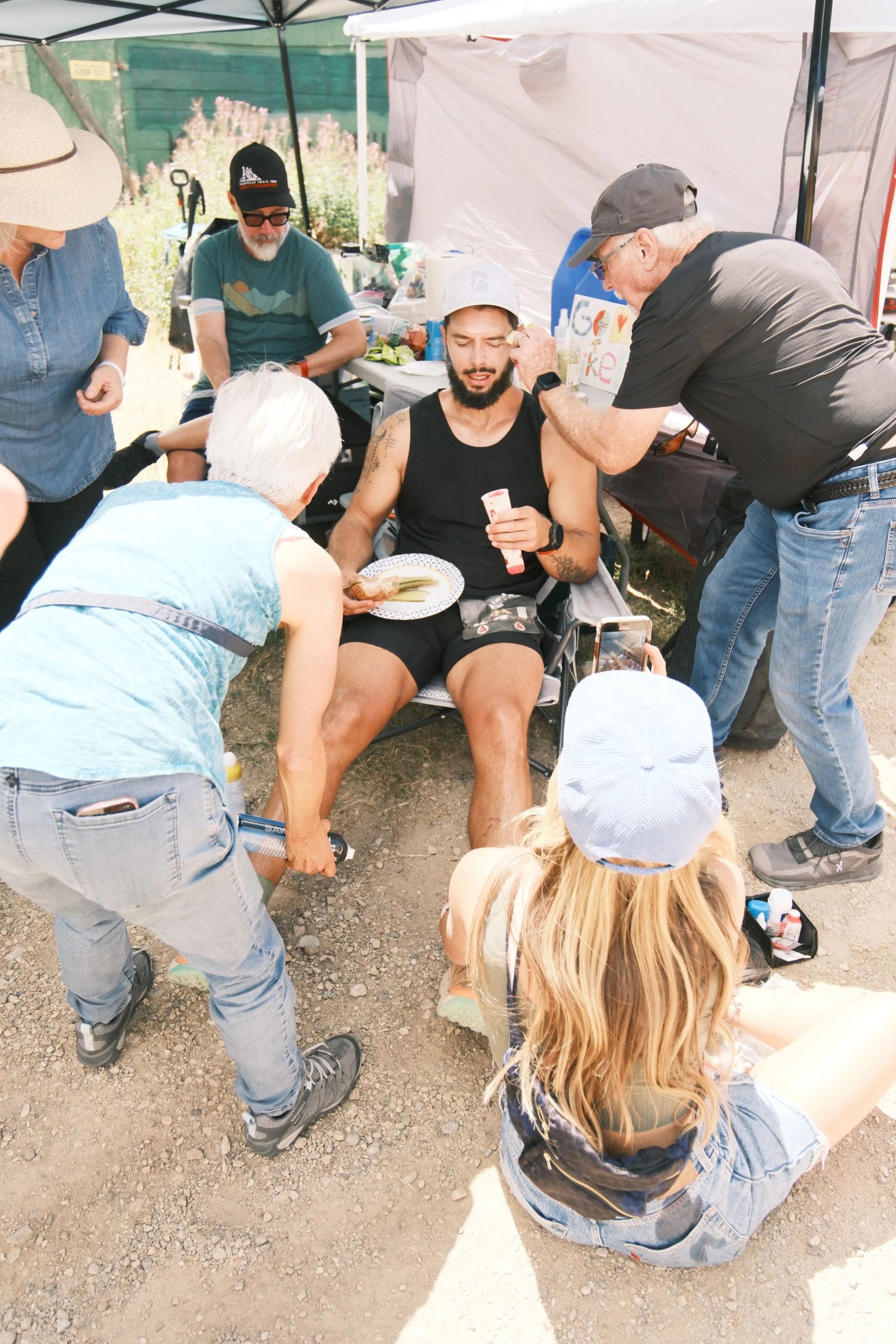
Kelly was running the aid stations like a NASCAR pit stop. She was directing the crew, which was made up of family and friends, and she had everything dialed: shoes, socks, shirts, food, headlamps, making sure the backpack was stuffed for the next section. Sometimes I was able to communicate with her ahead of time about what I needed, but mostly she just knew. My friend Beau paced me for over twenty miles through the middle of the night, and having him out there pushing me and keeping me company while I raced those cutoff schedules was the kind of support you do not forget. You do not do something like this alone, even on the sections where it feels like you are.
And here is where it gets interesting, because that day gave me some of the most important conversations I have ever had with myself. Somewhere around mile eighty, when my body was falling apart and the math was looking worse at every checkpoint, I had to decide over and over again to keep moving forward knowing that I was probably not going to make the official cutoff. I was not running for the buckle anymore. I was running because I wanted to know what I was made of when the external reward was gone and the only reason to keep going was the going itself. That is a conversation you cannot manufacture. You have to earn your way to mile eighty before the mountain will let you have it.
At mile ninety-five, I knew for certain. I was on a stretch of road with cars passing, and I could do the math well enough to know that the last five miles were not going to happen in time. And I had a moment where I had to decide whether I was even going to go to the finish line, or whether I was just going to call someone to come pick me up off the road. Because at that point, what is the finish line if you are not going to make the cutoff? What does it even mean to cross it?
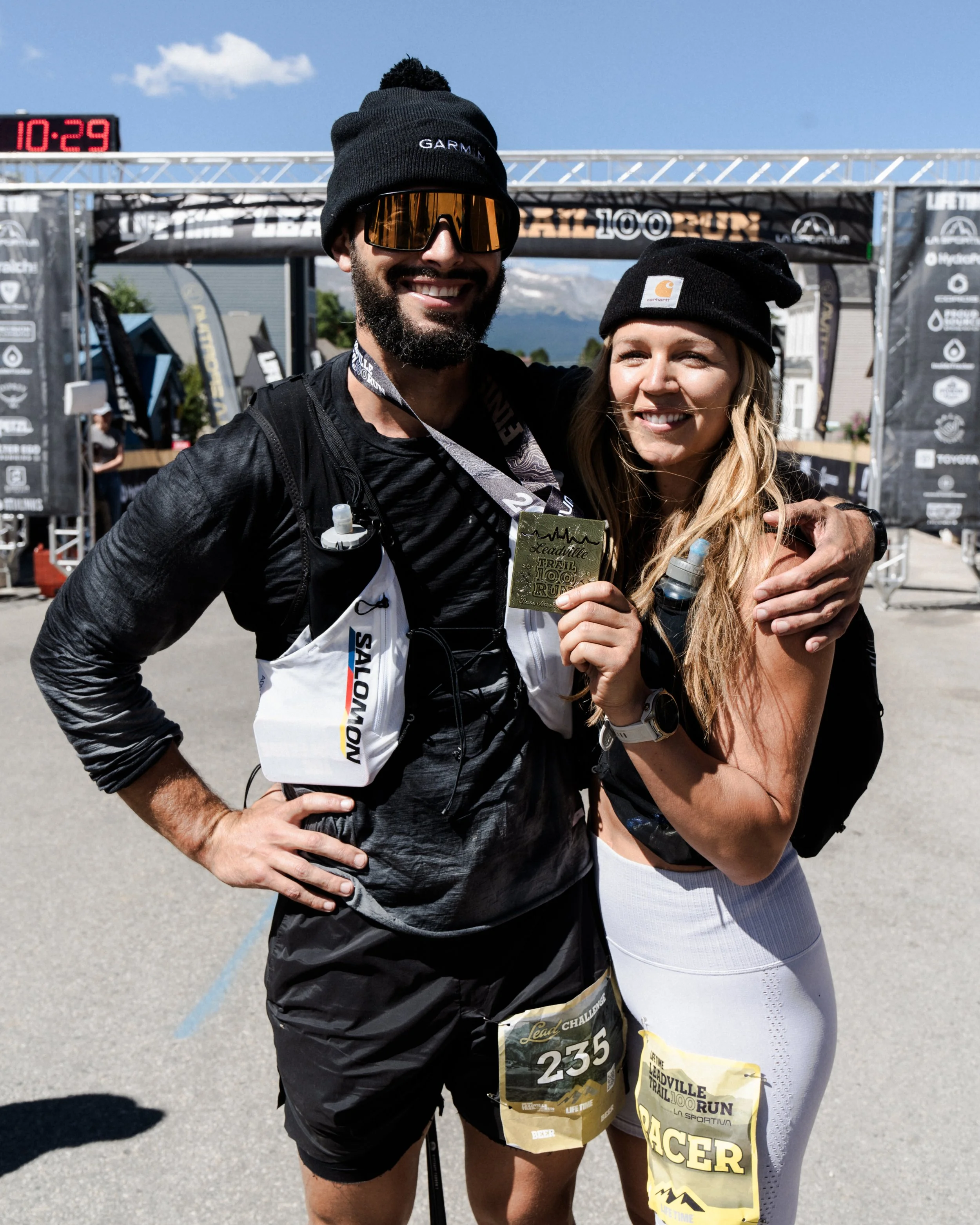
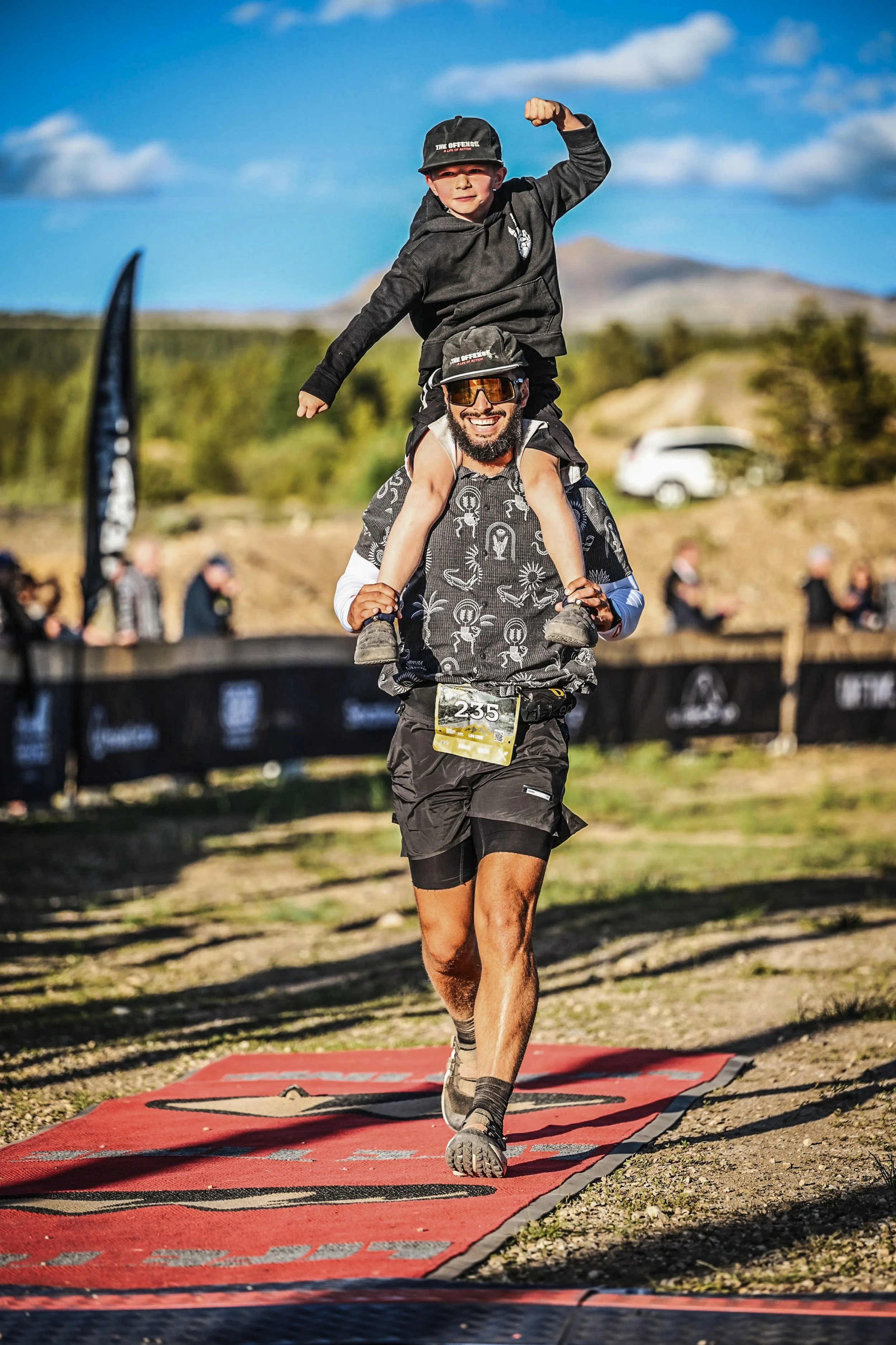
I decided I wanted to finish. I came in seventy minutes short of the time required for official Lead Challenger status. No belt buckle, and not the thing I came for. But when I crossed that finish line, my mom was there, my dad was there, Kelly was there, some of my best friends were there, and more friends were waiting on the other side. The announcers still announced me coming in, and I was proud. Not the kind of proud that comes from winning something, but the kind that comes from knowing you gave everything you had to give and then decided to keep going anyway.
Coming Back, 2025
Last year I went back for the hundred-mile mountain bike after setting the Turkish getup world record at 255 pounds. Five spokes snapped just past the halfway point, and for the second time I watched the race end for reasons that had nothing to do with how hard I was willing to work, which is its own kind of frustrating. Another did-not-finish, another year of coming home without the thing I went for.
2026
A few weeks ago I broke the Turkish getup world record again, coming in just over 260 lbs. I am now in the process of dropping roughly twenty percent of my body weight to prepare for ‘Mountain Mike’, shifting my training entirely, and building toward the Lead Challenge for the third time, this time without a water bike the week before and with a lot more respect for what the series demands.
People ask me why I keep going back, and I think the honest answer is that I am grateful to have something this hard to keep returning to, a dragon worth going back to slay. Not grateful in the way people say when they are trying to put a positive spin on suffering, but genuinely grateful, the way you are grateful for a relationship that asks real things of you and makes you grow because of it. Leadville asks me a version of the same question every year, which is: Are you willing to put everything on the line, knowing you might come up short again? And every year, my answer has been yes, not because I am certain I will finish, but because the person who keeps saying yes to that question is someone I want to be.
There is also something about the place itself that keeps pulling me back. I moved to Colorado from New York because I wanted to be closer to big mountains and open land, and Leadville sits right in the middle of that. We all develop these relationships with places in our lives, a backyard we grew up in, a creek down the street, a corner of the world that means something to us in a way we cannot fully explain. Leadville has become that for me. The town, the trails, the altitude, the way the mountains look when you are eighty miles into something you are not sure you can finish. Those mountains have watched me fail three times now, and they will be there this summer to watch me try again, and there is something honest about that kind of relationship with a place.
I have learned more about myself in the races I did not finish than in most of the things I have succeeded at. That is a strange thing to say, and I am not sure I would have believed it before I sat down on Hope Pass in 2023, but I believe it now. The conversations you earn at mile eighty, the ones you can only have when you have given everything and it still was not enough, are not really about the race. They are about the person you are becoming by deciding to keep coming back, and whether the building itself is enough of a reason to return.
For me, it is. And I would not be able to keep coming back without the people who show up alongside me, especially Kelly, who has been there through the years of training, the early mornings, the race weekends, and every aid station in between. You do not do something like this alone, even when the miles feel solitary, and I am grateful for the support that makes it possible to keep saying yes.
I will be in Leadville this summer, chasing the same challenge, having the same conversation with the same mountains, and finding out what this version of me has to say.
- Mike