Old Man Winter
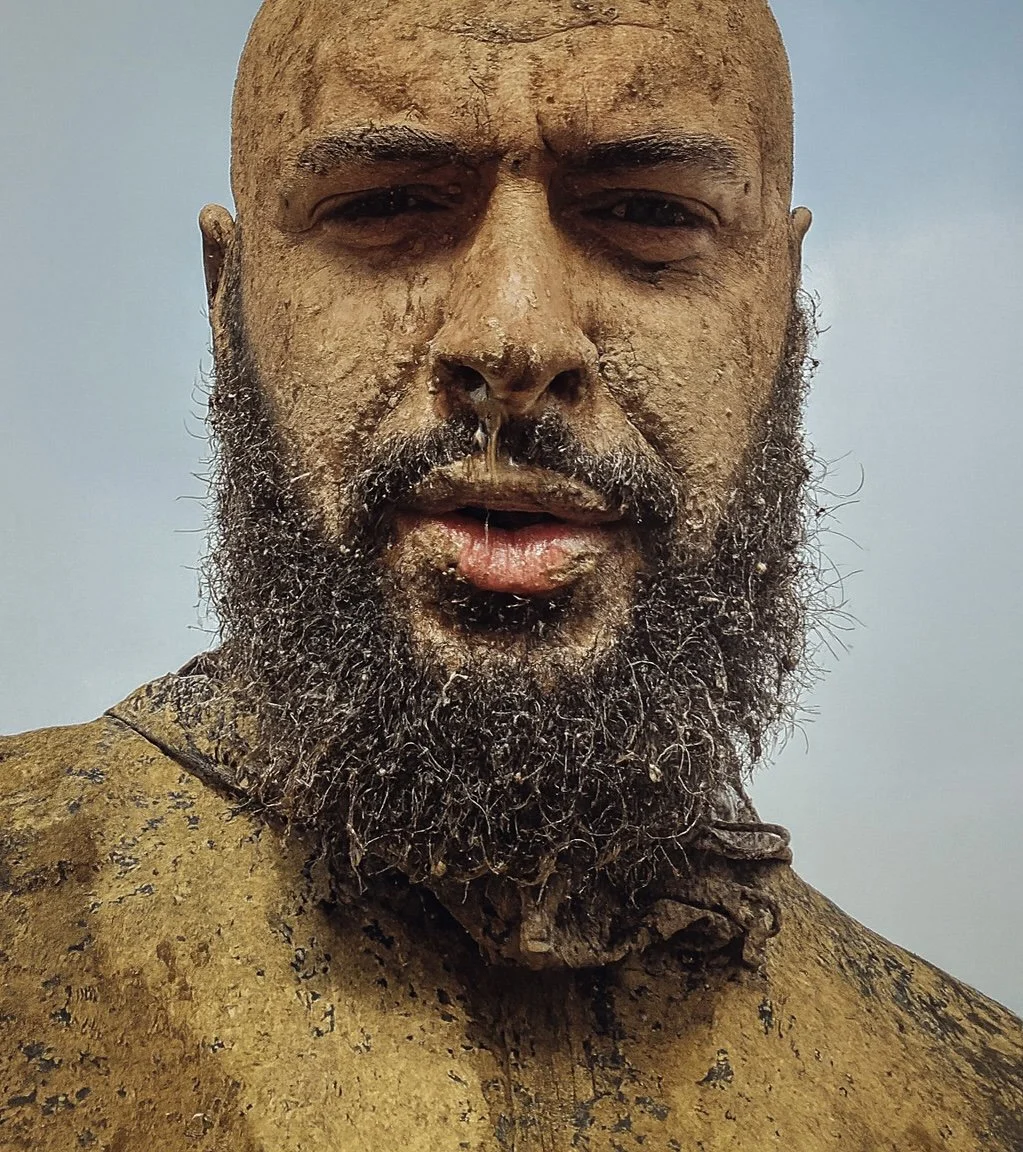
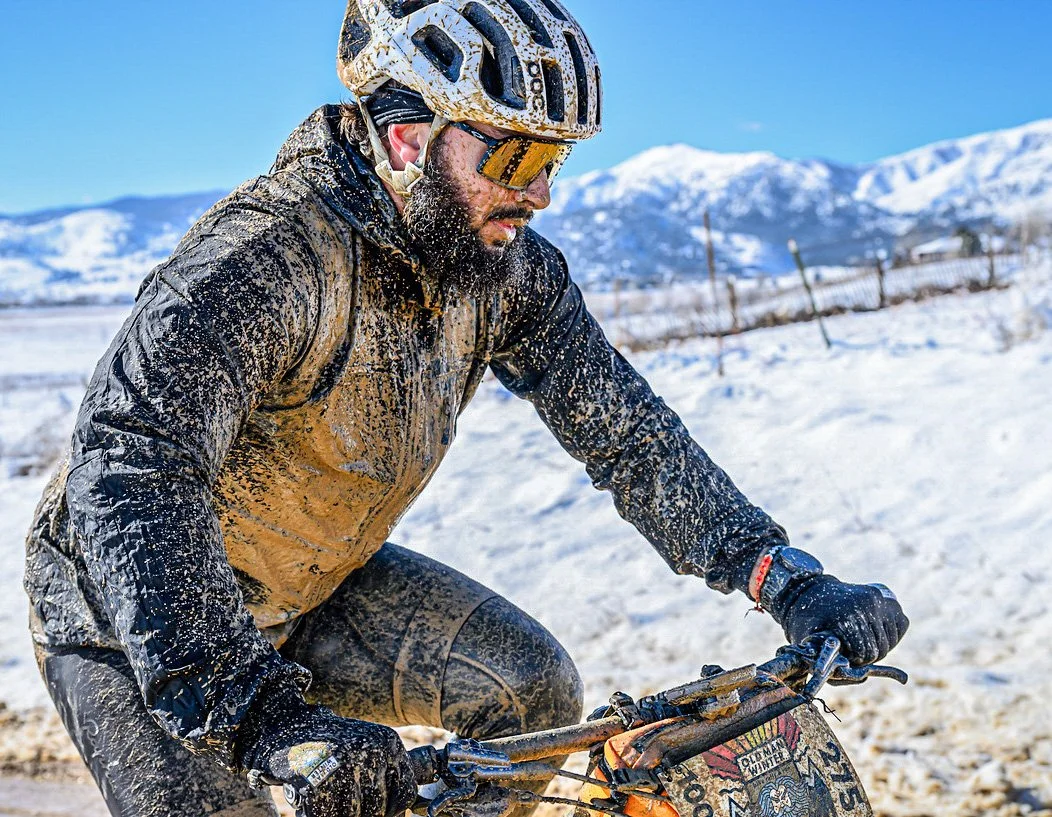
A few years ago, in the middle of February, I lined up for a 100-kilometer bike ride in Colorado called Old Man Winter. I want to say I was prepared, but the honest version is that I knew what I was signing up for and showed up anyway, which is not the same thing. The route cuts through open roads and trails north of Boulder, and the conditions that year were exactly what the name promises: snow, mud, wind, and a kind of cold that finds its way into places you did not know could get cold. There is no pretending on a ride like that. The weather does not care about your training plan, your gear list, or how many races you have finished before. It just is, and you either deal with it or you do not.
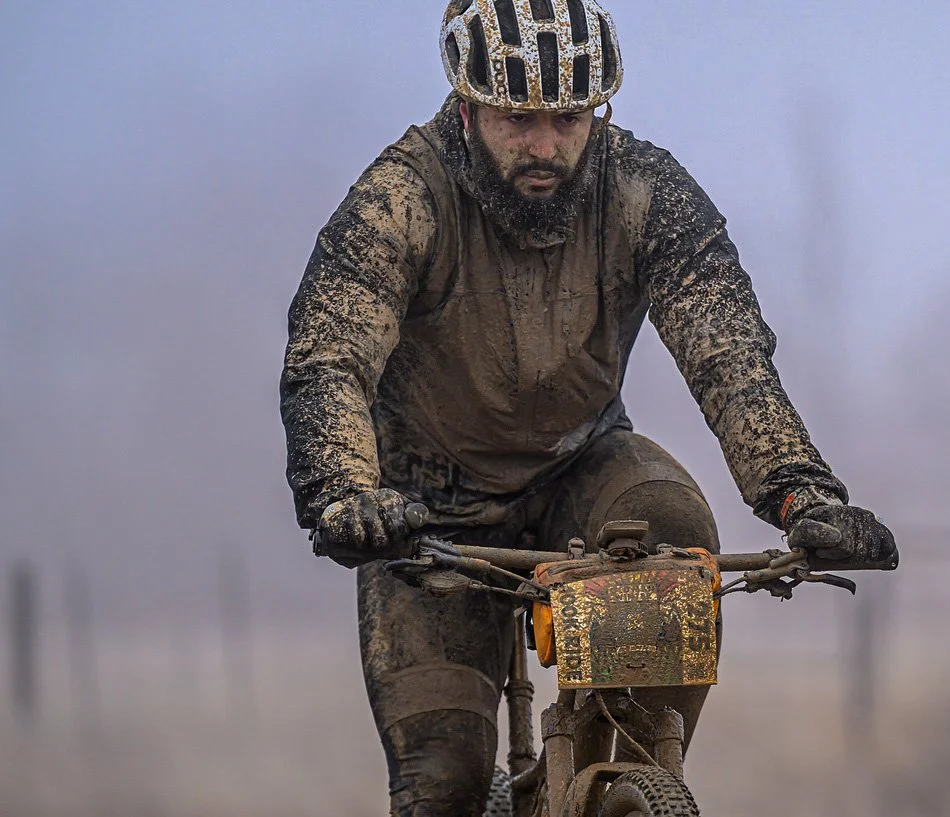
By the halfway point I looked like something the earth had tried to swallow and spit back out. Mud caked into my beard, my face, my kit, every moving part of the bike. My hands had stopped communicating useful information to my brain somewhere around kilometer thirty, and the wind had a way of showing up on every exposed stretch like it had been waiting for me personally. There were long sections where the only thought I could hold onto was the next pedal stroke, because thinking any further ahead than that made the whole thing feel impossible. And I remember this strange thing happening where the cold stopped being something I was experiencing and started feeling like something I was negotiating with, like it was an entity making a case for why I had done enough and could reasonably call it a day.
I did not call it a day, and I kept pedaling, but the reason I am writing about this now, years later, is not because I want to talk about the ride itself. It is because of what the ride clarified for me about something I see all the time in my coaching work, which is the slow, invisible cost of a life that never asks anything hard of you.
THE COMFORT PROBLEM
Here is what I have come to believe about days like Old Man Winter: they do not teach you something new about yourself so much as they strip away the version of yourself that only exists when things are comfortable. The guy who thinks he is patient, disciplined, mentally tough, whatever story you carry around in good conditions, that guy gets tested when his fingers do not work and the mud is so deep that his tires lose traction on every climb and the voice in his head is building a very persuasive case for why stopping would be the smart move. What you learn is not whether you are tough. You learn whether you can keep choosing to move forward when every reasonable signal is telling you to stop.
I think about this constantly because the parallel to everyday life is hard to miss. Most of the people I sit with in coaching are not struggling because life is objectively terrible. They are struggling because they have built a life that rarely asks anything difficult of them, and the absence of difficulty has quietly eroded their sense of what they are capable of. Comfort does that without announcing itself as a problem. It just slowly removes the evidence you need to believe in your own resilience, and one day you realize you do not trust yourself the way you used to, and you cannot quite explain why.
Harvard evolutionary biologist Daniel Lieberman has written about this mismatch extensively. Human beings evolved over hundreds of thousands of years in environments that demanded daily physical effort, not as a choice but as a condition of survival. Lieberman's argument is that we are biologically designed for a level of physical demand that modern life has almost entirely eliminated. We have engineered comfort so successfully that we have removed the very stimulus our bodies and minds were built to respond to. And then we wonder why so many people feel flat, anxious, purposeless, and disconnected from themselves despite having more material comfort than any generation in human history.
This is not an argument against modernity. It is an observation about what gets lost when difficulty becomes entirely optional. The body was designed to be asked hard questions, and when you stop asking them, something important goes quiet.
WHAT THE BODY KNOWS
February in Colorado on a bike for a hundred kilometers is not a metaphor for anything. It is just a hard thing that I chose to do, and the choosing is the part that mattered. Not because finishing proved something to the world, but because every time you voluntarily walk into difficulty and come out the other side, you deposit something in your own account that no one else can give you.
Albert Bandura, the Stanford psychologist who spent decades studying how people develop belief in their own capabilities, called this mastery experience. His research showed that the most powerful source of self-efficacy is not encouragement, visualization, or affirmation. It is the actual lived experience of doing something hard and succeeding. You can tell someone they are capable all day long and it barely registers. But when their body has been through something demanding and they did not quit, that experience creates a kind of evidence that the mind cannot argue with. It rewrites the internal story, not because someone told you a new one, but because you lived it.
I think this is why so many people feel stuck even when they have done everything they were told would make them feel unstuck. They have read the books, hired the therapist, maybe even hired a coach, and they have a sophisticated understanding of their patterns and their history. All of that matters. But understanding your story is not the same as rewriting it, and the rewriting happens through action, not analysis. The body is where the new draft gets written, and it gets written through doing things that are hard enough to produce real evidence about who you are becoming.
There is a moment in any sufficiently demanding physical challenge where the narrative in your head simplifies down to one question: will I keep going or will I stop? Everything else falls away. You are not thinking about your childhood or your quarterly goals or the email you forgot to send. You are just there, fully in your body, confronting the most basic version of who you are in the absence of comfort and convenience. I have felt that on ultramarathons, on open-water paddles, and I felt it acutely on Old Man Winter when my legs were failing and the mud was relentless and the finish line was still absurdly far away. And every single time, the version of me that exists on the other side of that question is someone I trust more than the version who walked in.
THE CHOOSING
When I finally crossed the finish line, covered in mud, frozen in places I did not think could freeze, genuinely unsure how I had kept moving through the last twenty kilometers, the first thing I saw was my seven-year-old and our new puppy. They had been waiting in the cold. My kid's face had that particular look children get when they are trying to decide if you are okay or if they should be worried about you, and then he just started laughing, because I looked ridiculous and probably a little unhinged, and the puppy lost her mind completely.
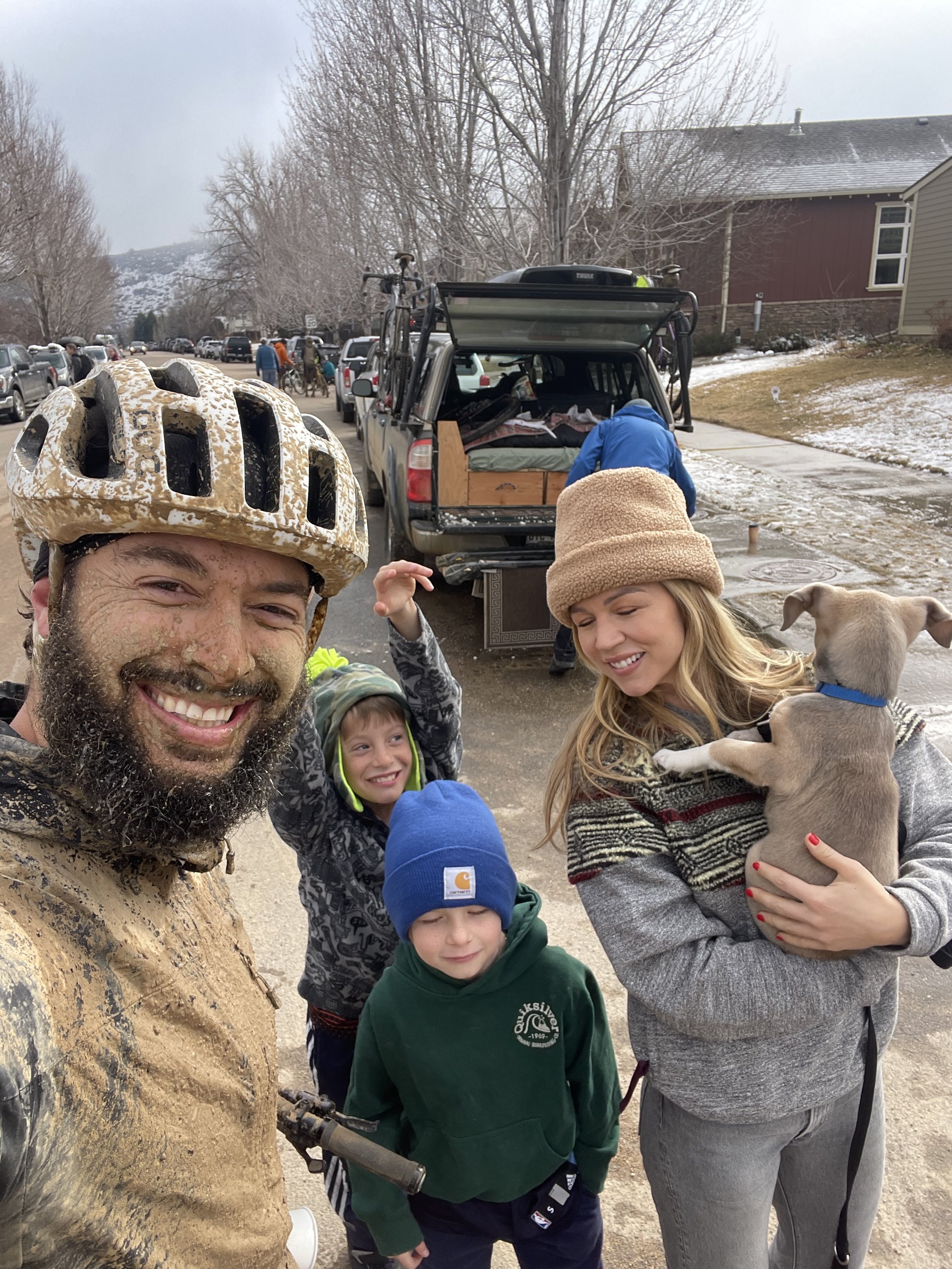
I stood there, used up, covered in the evidence of the last several hours, and felt something I have tried to describe many times and still cannot quite get right. Not happiness exactly. Something closer to real. Fully present, fully spent, fully alive in a way that only seems to happen when you have been asked for everything and found a way to give it. And I thought about the version of me who had been standing at the start line that morning, knowing exactly how miserable the next several hours were going to be, and choosing to clip in anyway, and about what it meant that this was what my kid got to see. Not the comfortable version. The one who went anyway.
Tyler VanderWeele's research at Harvard on human flourishing suggests this is not accidental. External markers of success overlap with genuine flourishing far less than most people assume. Meaning tends to emerge through purpose, growth, and connection, and voluntarily choosing something difficult provides all three at once.
The world will hand you plenty of suffering you did not choose. Illness, loss, betrayal, failure that arrives uninvited. That kind of suffering can wound, and sometimes it does wound deeply. Viktor Frankl understood this well: the expectation that unchosen suffering should automatically produce wisdom or growth is its own kind of cruelty. But there is a different category of difficulty, the kind you walk toward on purpose, with intention, knowing it will be hard and choosing it precisely because of that. I think that kind has the power to change who you believe you are, not because the cold and the mud are magic, but because choosing not to quit when quitting makes perfect sense is the body's way of writing a new story about what you are made of.
That choice is available to everyone. Not necessarily on a bike in a Colorado winter, but in whatever form difficulty takes when you stop organizing your life around avoiding it. Maybe it is a training plan that scares you a little, or a conversation you have been putting off, or a commitment that will require something of your body and your character that you are not entirely sure you can deliver. The scale does not matter nearly as much as the choosing.
What is the hard thing you have been avoiding that might teach you something you need to know?
References:
Bandura, A. (1977). Self-efficacy: Toward a unifying theory of behavioral change. Psychological Review.
Lieberman, D. (2013). The Story of the Human Body. Pantheon.
VanderWeele, T.J. (2017). On the promotion of human flourishing. PNAS.
Frankl, V. (1946). Man's Search for Meaning. Beacon Press.