Get Back Up
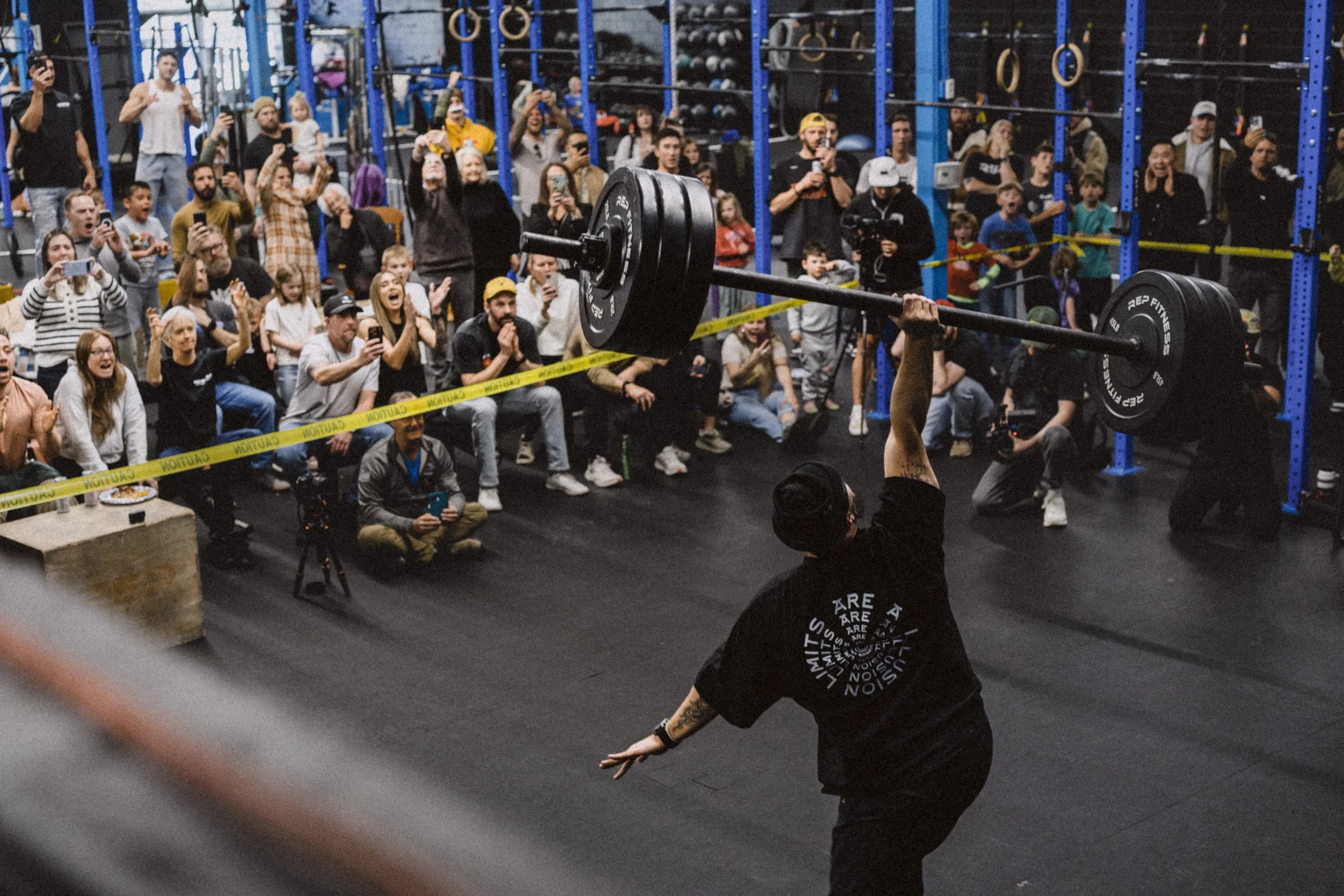
A few weeks ago I tried to break a world record in front of over a hundred people, and I could not do it. I made more than twenty attempts over two and a half hours, and every single one of them ended with the bar coming back down and me starting over on the floor. By the end I was tearing up, not from pain but from the reality that I had organized this whole event, raised over a thousand dollars for charity, had family fly in from out of state, and it was not going to be my day. Nine days out of ten I would have hit that lift. This was the tenth day.
The lift was a Turkish getup, which is one of those exercises that asks for everything at once and does not let you cheat at any point along the way. You start flat on your back with a weight held over your chest in one arm, and from there you have to sit up onto your elbow, press up onto your hand, come into a lunge where the arm holding the weight is on the same side as the knee that is up, which means you have none of the natural counterbalance you get from opposite arm and opposite leg, and then stand all the way up from that awkward position. Then you reverse the entire thing back down, keeping the weight locked out overhead the whole time, maintaining focus and control through every inch of it. There are no easy points in the entire lift, and the hardest part is right at the beginning, when you are flat on your back and have to initiate movement from nothing. The weight I was attempting was over 260 pounds, which is more than 110 percent of my body weight. I was trying to get up from the floor with a loaded barbell that weighed more than I did.
Some of those twenty-plus attempts were close, the kind of close where you stand all the way up and think you have it, and then your balance shifts and the bar comes down and you have to start over. After enough misses you start getting into your own head, adjusting the weight by a few pounds, trying to find the version of the lift that will cooperate, and the peaks and valleys of almost-hitting-it and then not are brutal to ride. Every time you set up for another attempt, you have to find a way to believe it is going to work even though the last one did not, and you have to do that with a hundred people watching you in real time.
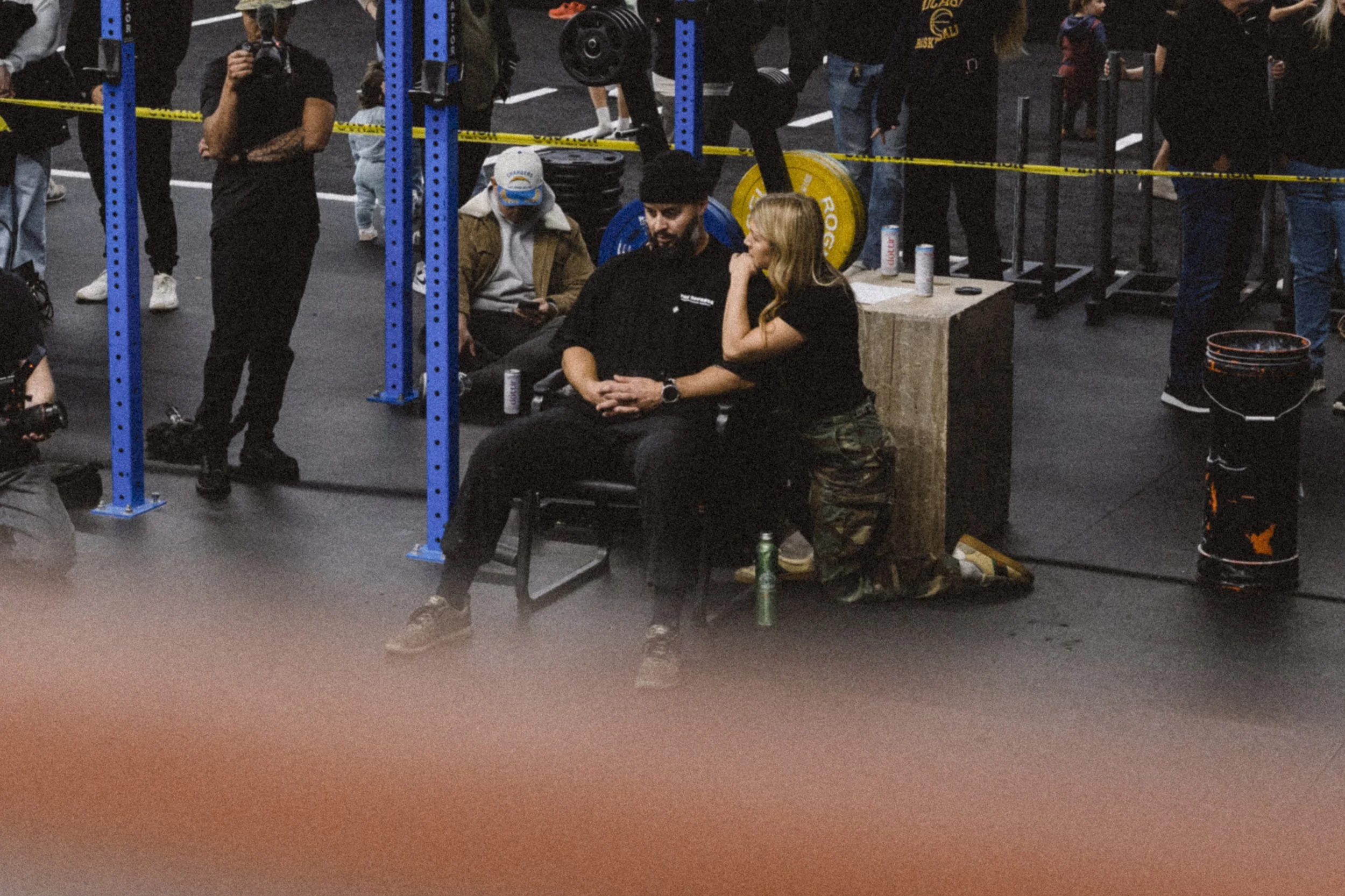
Some people had to leave during those two and a half hours, which I understood. The ones who stayed were quiet and encouraging, and I could feel the room pulling for me. But at a certain point, I knew it was not going to happen, and that knowing is a hard thing to sit with when the room is full of people who showed up because they believed in you.
Afterward I stood in front of everyone and told them that some days you are the donut and some days you are the hole, which is a line my good friend Matthew Slaughter said to me the first day I ever met him and it has stuck with me ever since. I told them I was proud of myself for going out and taking a big swing, and I was grateful that they showed up and showed me love and support. And I meant all of that. But it is one thing to say you are proud of taking a big swing, and it is another thing to actually stand there, having just failed publicly more than twenty times, and look people in the eye and mean it.
The reason I chose this lift for this event, and the reason I partnered with Valor Fit, an organization that supports veterans through physical fitness, community, and mental health resources, is personal. My grandfather Raphael died by suicide when I was in elementary school. The full effect that had on my family is something I am still not entirely sure of to this day, because you do not always know why things happen the way they do, and the ripples from something like that move through a family in ways that are hard to trace. My other grandfather was a veteran, a prisoner of war in a German camp during World War II for eighteen months. He came back and never really talked about that time, and I know it was difficult for him in ways he carried quietly for the rest of his life. I have also lost friends to suicide, and the thing that stays with me is how invisible the struggle can be from the outside.
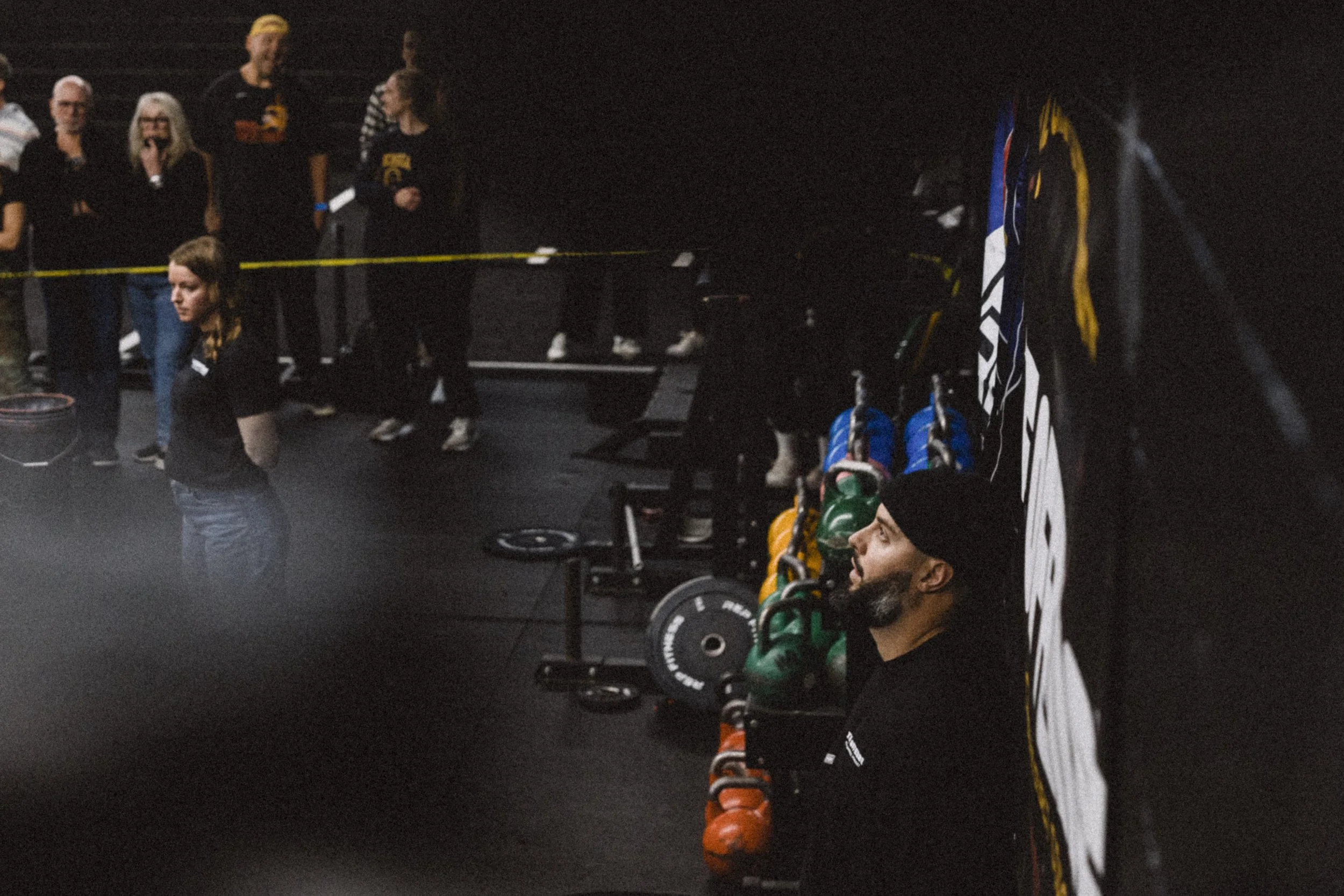
When I think about the Turkish getup as more than just a lift, this is where my mind goes. You are lying flat on your back with a weight pressing down on you that is more than your own body weight, and the hardest part of the entire movement is right there at the beginning, initiating that first bit of motion when everything is working against you and there is no momentum to help. I do not think that is a metaphor I am reaching for. I think it is the same thing, expressed through the body. The veterans that Valor Fit serves, the people who are struggling with depression or grief or the kind of pain they do not talk about, they know what it feels like to be on their back with something crushing bearing down on them. And the work is the same: you have to initiate movement from nothing, and you have to want to get up, and the getting up is the hardest part.
I came back forty-eight hours later. I was sore from all of those attempts, and I had about thirty people there this time, a few buddies, some official witnesses, and the official scale. I needed to hit the lift soon because I was about to head to Penn and Harvard for school and needed to shift my training toward the Leadville 100. I hit the lift, stood up with the bar locked out overhead, and knew the moment I had it, and the relief was real. I think I had another ten pounds in the tank honestly, but my body was still paying for those twenty-plus attempts from less than two days before, and I was not going to push it.
The world record matters to me, but it is not what I will remember most about those few days. What I will remember is standing in that room after two and a half hours of public failure, looking at my uncle who had flown in from Idaho, my mom who had driven three hours, the veterans who came out, the friends who stayed the entire time, and having to find the words to say that I could not do it today. That moment required more of me than the lift itself. Because the lift is a physical challenge, and I have trained for physical challenges my entire life. But standing in front of people you love and admitting that you came up short, without making excuses, without deflecting, without pretending it does not sting, that is a different kind of getting up. And I think it might be the more important one.
Here is the thing I keep coming back to: the Turkish getup does not matter, and the world record does not really matter either. What matters is the willingness to go after something you once believed was completely impossible and to do it in front of people, knowing full well it might not work, because the lift was never the point. The real question is whether you are willing to be that exposed, that committed, that serious about something when there is no guarantee it will go your way.
I have noticed, in my coaching and in the people I admire most, that the ones who are genuinely thriving are not the ones with the best plans or the safest bets. They are the ones who actually go for it, whatever their version of "it" is, whether that is a career change, a hard conversation, a race they are not sure they can finish, or a relationship they are not sure they deserve. And the ones who struggle the most are the ones who convince themselves they are fine on the sideline, watching other people try, telling themselves they could have done it if they wanted to, building an identity around being too cool or too smart or too careful to put themselves out there. That math does not work long-term, because regret compounds and the weight of the thing you never attempted gets heavier every year, not lighter.
I would rather be the person who organizes the event, invites everyone he cares about, puts over 110 percent of his body weight overhead, and fails in front of all of them than the person who never tries because the risk of looking foolish is too high. Some of those swings will land and some will not. But the people who take them, the ones who refuse to be too cool to care, too protected to risk something real, those are the people I want in my life, and that is the person I want to be. The heaviest thing in that room was never the barbell. It was the fear of being seen falling short, and the only way I know through that fear is to try.
Mike