Rim to Rim to Rim Grand Canyon
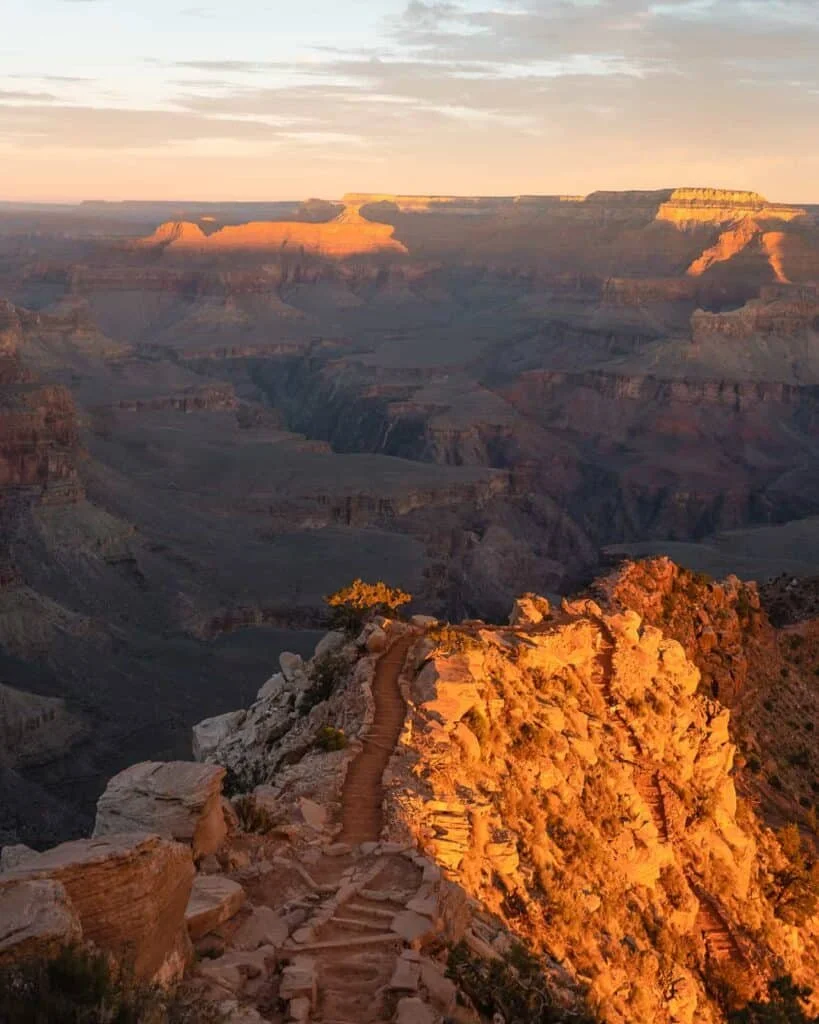
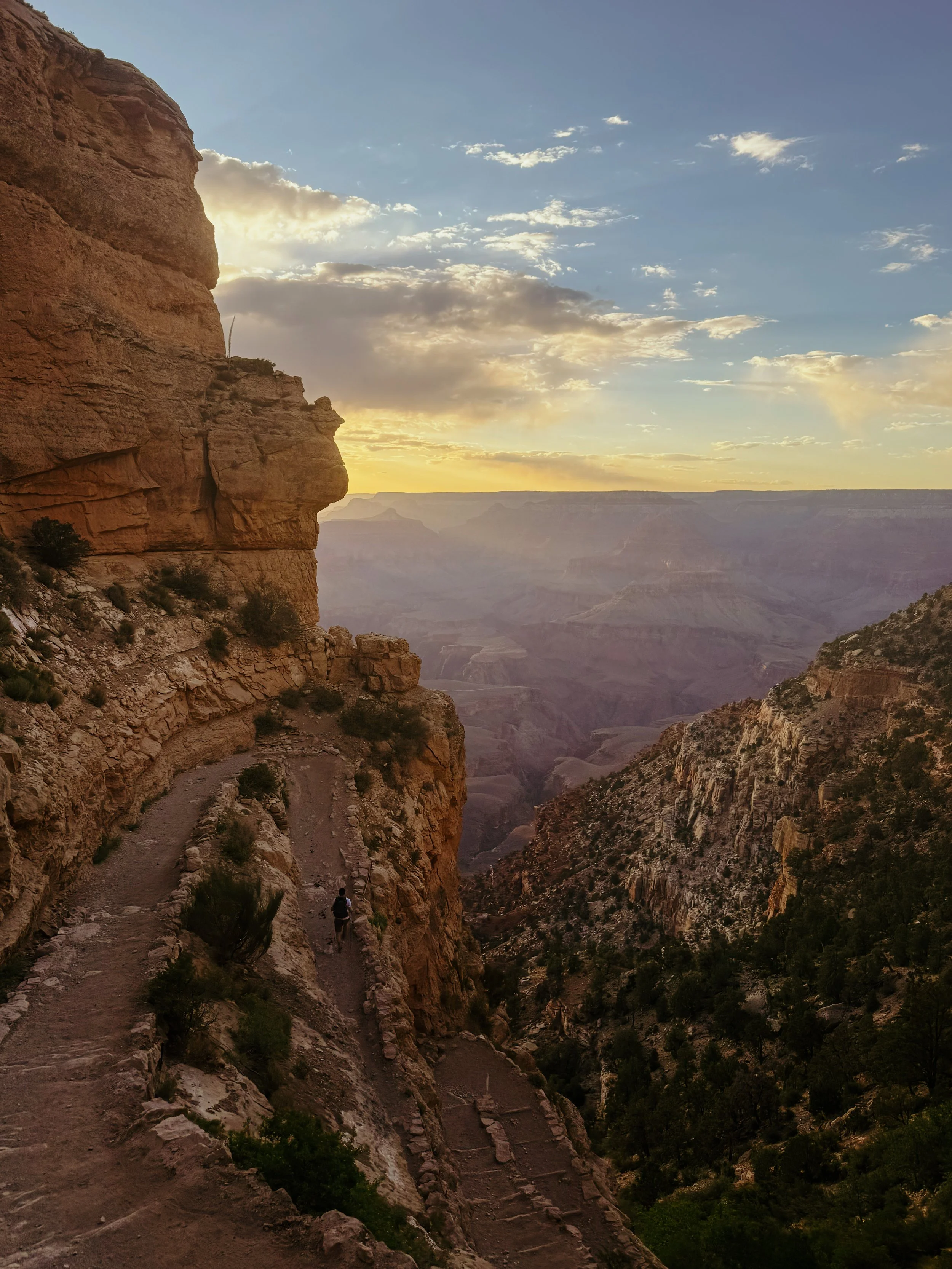
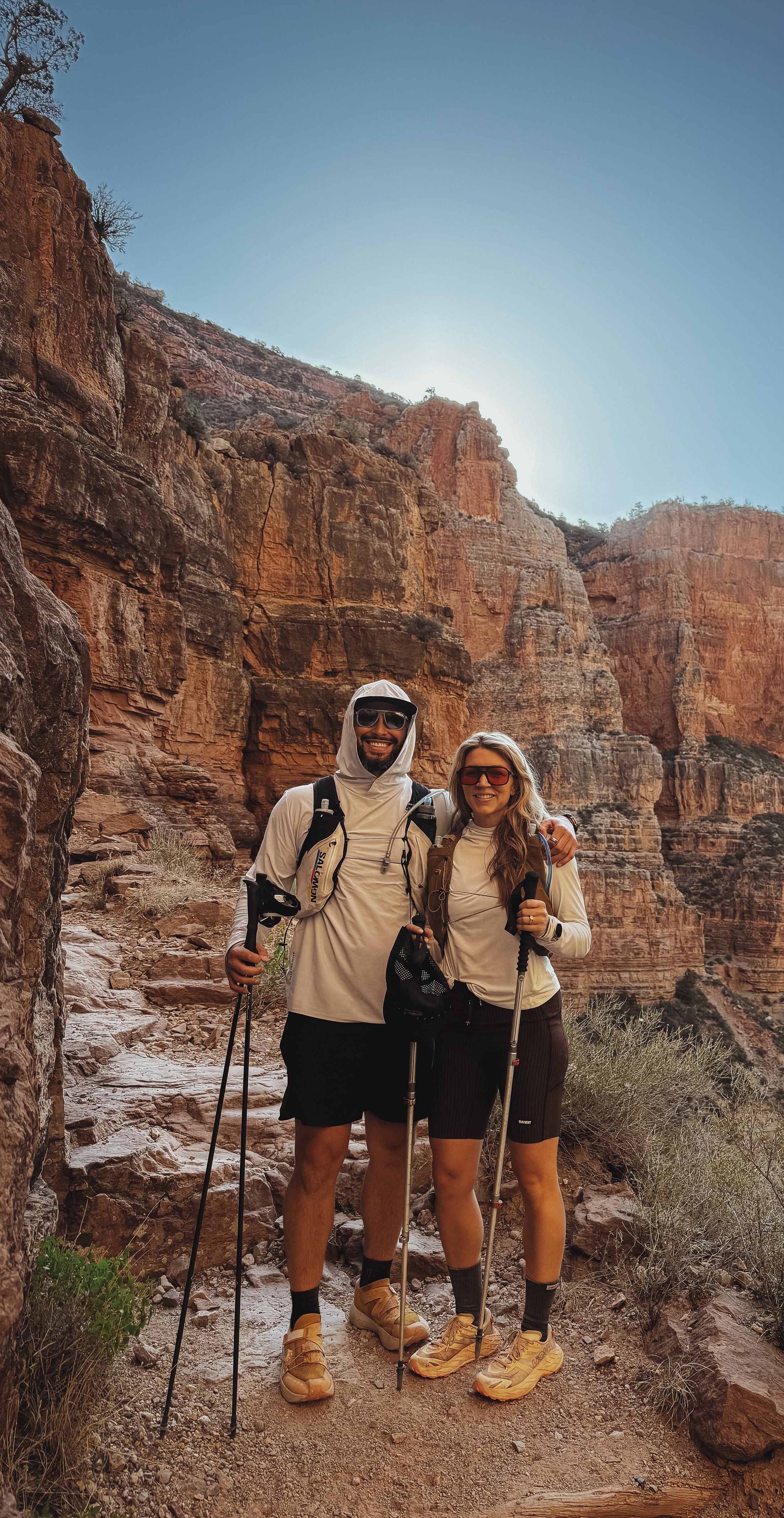
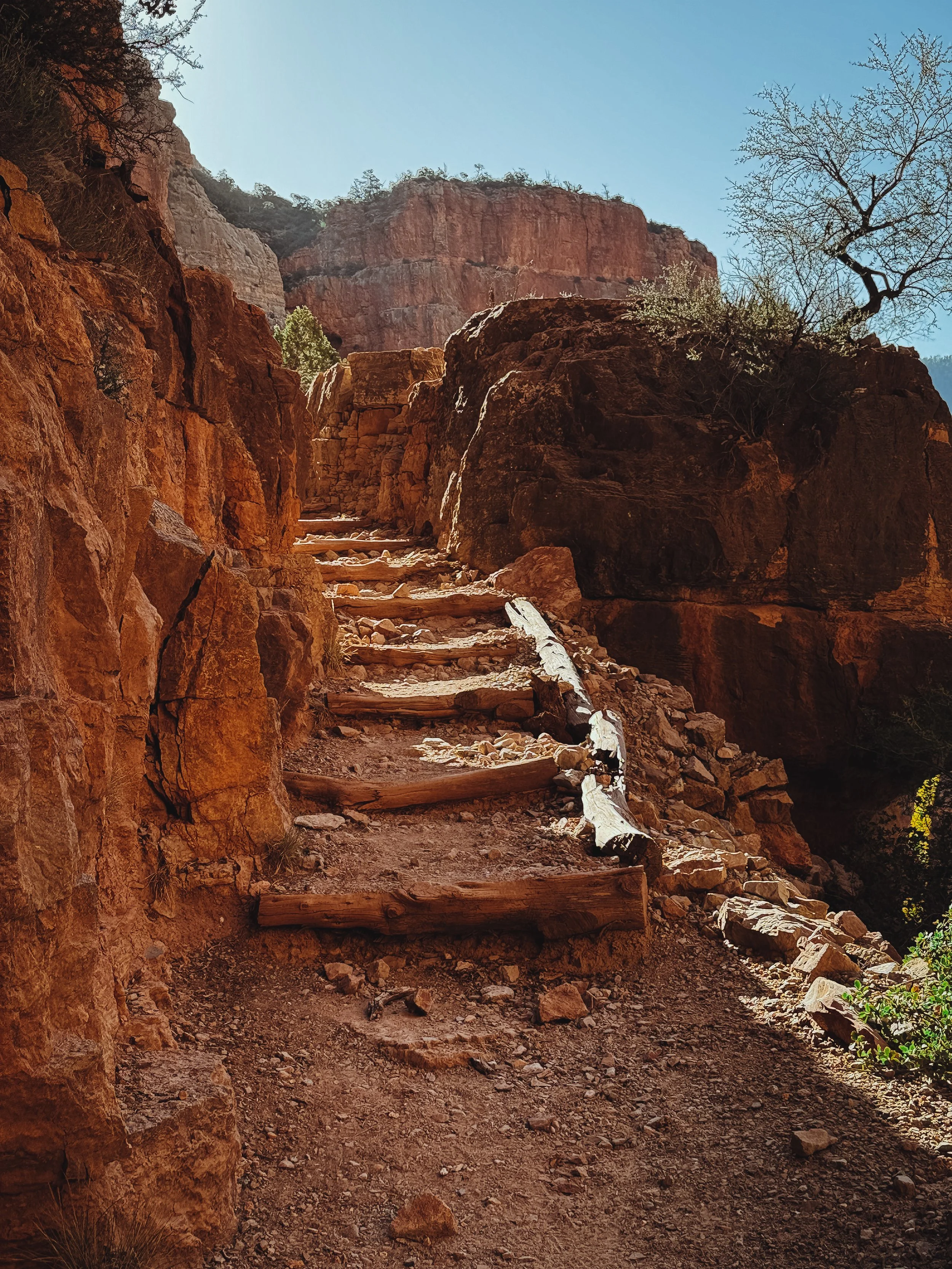
Last weekend, I ran the Grand Canyon rim to rim to rim with my new fiancée, Kelly. I knew nearly thirty other people doing the same thing in the canyon that day, a mix of different paces and different crews and different stories, some I had seen the week before and some I had not seen in a decade. We all suffered in our own particular ways, and we all had our own private moments down there in the dark and the heat and the red dust.
In the days since, the texts and the posts and the photos have been coming in from all of them, different voices and different angles and different miles. And one word keeps surfacing in almost every one of them, which is gratitude. Thirty accounts of a hard day in the canyon, and the through-line that speaks louder than the pride or the relief or even the joy is gratitude.
I am still close enough to it that the fine red dust is blowing out my nose. But I want to try to understand the gratitude piece while it is still warm, before the meaning of it gets smoothed over by time and life.
The headlamps clicked on at the South Kaibab trailhead in the early morning hours. It was just Kelly and me at that moment, our small beams cutting little tunnels into a darkness so complete it felt like the canyon was still deciding whether to exist. You could not see the drop but you could feel it, the way the air gets cooler and wider when there is nothing in front of you for a very long way. Somewhere below us, the Colorado River was moving the way it has been moving for six million years, indifferent to our plans.
This was our second rim to rim to rim together, my third. Forty-four miles, roughly eleven thousand feet of climbing and the same coming back down, South to North to South, finishing up the South Kaibab switchbacks before the sun dropped behind the western rim. That was the plan, anyway. The canyon is not particularly interested in your plan. It almost feels like a wise oracle that has its own plan for you, and the only way to learn the lesson is to drop in.
The story you tell about yourself
Dan McAdams is a psychologist at Northwestern who has spent the better part of four decades studying what he calls narrative identity. His basic claim is this: somewhere in late adolescence we start authoring a story about who we are, and we keep revising that story for the rest of our lives. The events of our lives are not really the raw material of identity. The story we tell about those events is. Two people can live the same divorce, the same illness, the same long run in a canyon, and walk away with two completely different selves on the other side, depending on the story they construct around what happened.
McAdams found something interesting among people who report the highest levels of meaning and well-being. They tend to tell what he calls redemption sequences, which are story arcs where something hard or painful or scary gets transformed into something generative. The suffering is not erased, and it is not pretended away, but rather it becomes the soil for something. The hard thing is where the meaning comes from, not in spite of itself but because of itself.
I think this is part of why the canyon does what it does.
When you choose to walk into a place that big with your own two feet, you are doing something quietly radical to your own narrative. You are casting yourself as a protagonist who steps toward difficulty rather than away from it. You are writing a chapter where the hard thing is the point. And the canyon, being the canyon, gives you plenty of hard things to work with and through.
Down into it
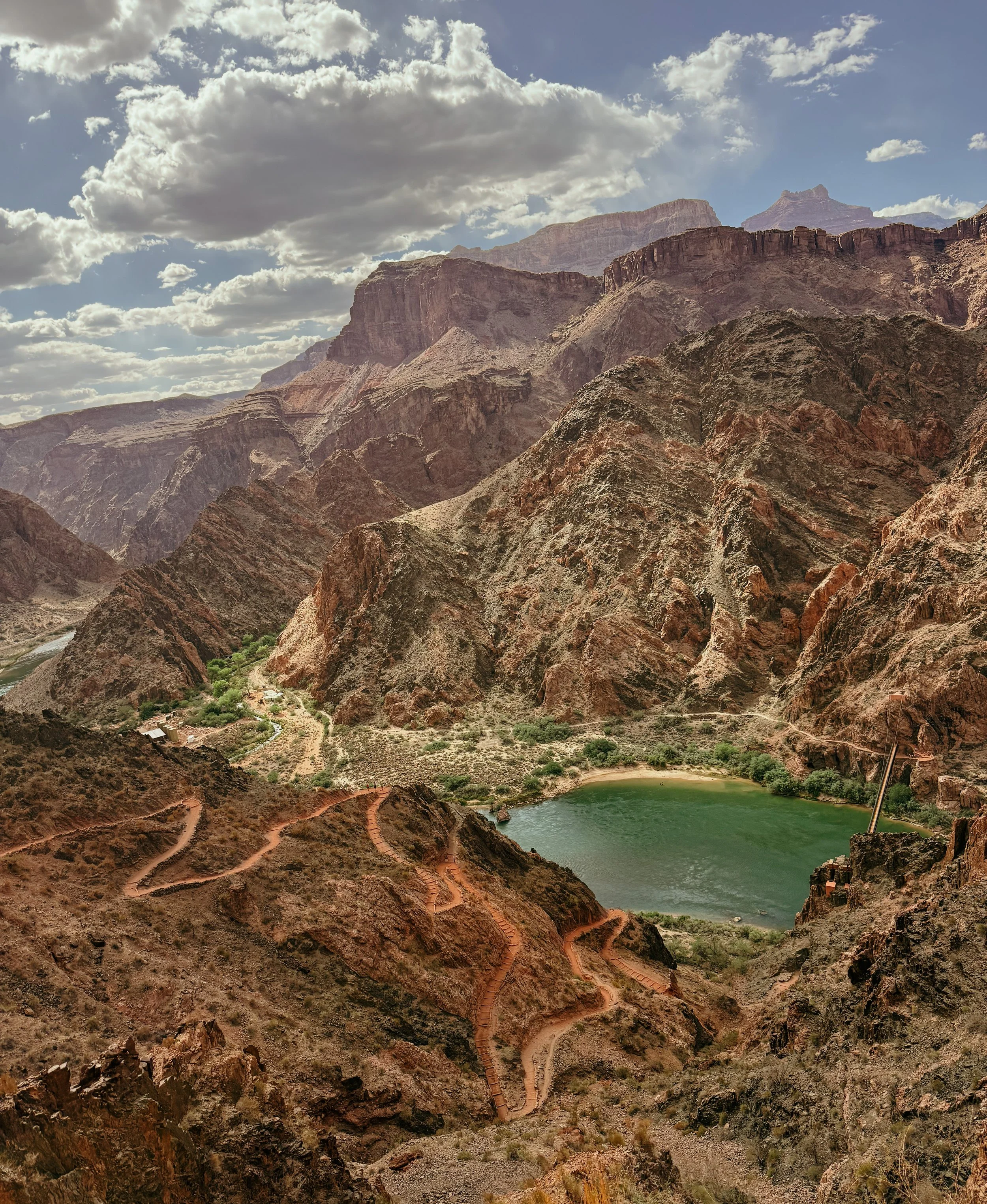
Kelly and I dropped off the South Rim while it was still fully dark, the trail a switchbacked ribbon under our headlamps. There is something about descending into the earth before sunrise that I do not have language for yet. You can feel the temperature changing in layers, the geology rising up past you in reverse chronology, two billion years of stone unspooling beneath your shoes. By the time we hit the Colorado at Phantom Ranch, the sky had gone from black to deep cobalt to a kind of bruised pink, and the canyon walls were starting to show their first reds.
Kelly and I have done a lot of hard things together. There is a particular flavor of conversation that only happens when you are six hours into a big day with someone you love. The small talk burns off early. What is left is quieter and more honest. Somewhere in the Box, that narrow inner gorge where the walls pinch in and the heat starts to build, we were not really talking much. We were just moving together, two pairs of feet finding the same rhythm on the rocks, breathing the same warming air. I remember we paused together to look back at the sun hitting the canyon walls, and I thought this was already enough.
The North Rim climb is its own animal. Roughly six thousand feet up over fourteen miles, exposed in places, the trail getting steeper as the air gets thinner. We climbed it alone, just the two of us moving up through the temperature zones in reverse, watching the canyon open up wider and wider behind us as we gained the rim.
And then, at the top, the people started appearing.
This is the part that is hard to describe to someone who has not been there. You spend hours in a quiet two-person world, and then you crest out onto the North Rim and there are faces you know, friends you had not seen in a decade and friends you had texted with the week before, crews that had started at different times from different directions, all of us converging close to the high point. There were hugs in the middle of nowhere and a few words about how everyone was holding up. The context was so absurd that all the normal social scaffolding fell away, and we just looked at each other, grinned like idiots, and traded candy and snacks like we were back in a middle school cafeteria. I personally was not giving up my Rice Krispies, but I did trade some Sour Patch Kids for sunscreen, which is something my eleven year old self would not have approved of.
After a bathroom break we turned around and started the run back.
The vastness problem
Dacher Keltner, who studies awe at Berkeley, talks about something he calls the small self. When humans encounter genuine vastness, whether that is a cathedral or a piece of music or a piece of geology that makes your own life feel like a single held breath, something measurable happens to the ego. It gets quieter, and the boundary between you and everything else gets thinner. People who have had recent awe experiences are more generous, more humble, more connected to others.
I am not a researcher of awe, but I have been a student of it. And what I have come to believe is that awe does something specific to the story you are telling about yourself. It interrupts it, helping to hit the pause button on the narrator. For a moment you stop being the main character of your own movie and you become a witness to something much older and much larger that does not need you to make sense of it. The Grand Canyon is extremely good at this. It was carved before any human story existed, and it will continue to be carved long after the last one is told. To run across it is to be allowed, briefly, into a timescale that has nothing to do with you.
I think this is the other half of why gratitude was the through-line for everyone I talked to. Narrative identity gives you the redemption arc, the meaning, the chapter where the hard thing became something. But awe gives you the humility to receive it. Without the awe, the suffering just becomes another achievement to be filed away. With the awe, it becomes a gift.
The light coming back
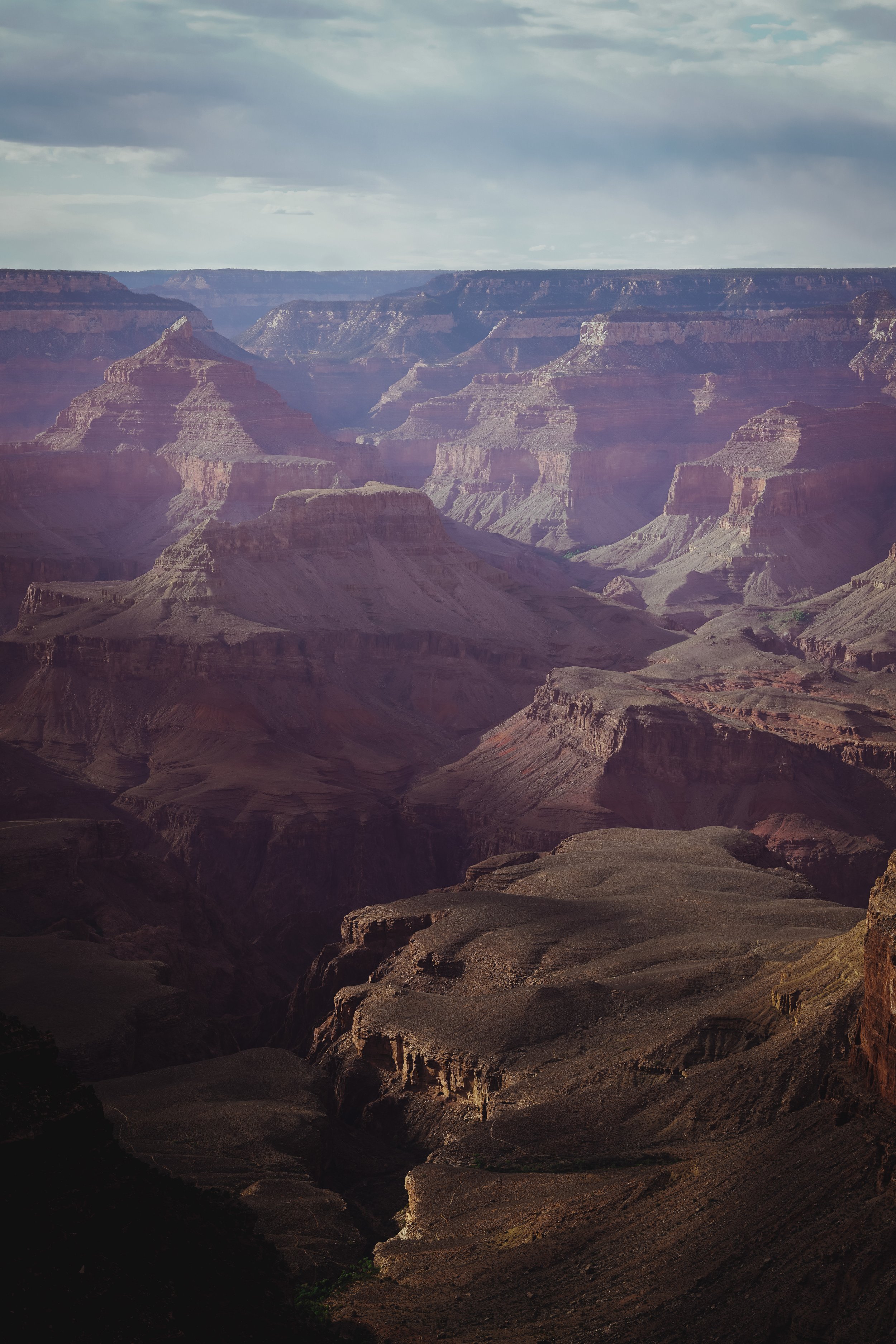
The way back is always its own conversation. You know the terrain now and you know what is coming, so there is no novelty left to carry you, only the work. But now there were also friends, crossing paths on the descent and leapfrogging at water stops and catching glimpses of familiar packs on the switchbacks below. The canyon had given us our solitude on the way out and our community on the way back, and I am not sure I would have known to ask for either in that order.
The sun started its long western slide as we climbed back out of the inner gorge and onto the South Kaibab switchbacks. I keep coming back to that last climb. The light in the canyon in the final hour before sunset does something I cannot quite describe, where the reds get redder and the shadows get longer and softer at the same time and the whole place seems to exhale. We were tired in the deep way you only get tired after a very long day, the kind of tired that is also a kind of clarity. Kelly was a few steps ahead of me on one of the upper switchbacks and the light caught her, and I remember thinking that I had been given something I had not earned, even though I had just spent fourteen hours earning it. That is the paradox at the center of all of this. You have to do the work to receive the gift, but the gift is not the work.
We topped out with enough light left to sit on the rim and watch the sun finish its work, the canyon going through its last colors below us. Other friends were still coming up behind us, headlamps clicking back on now for the second time that day, faint moving stars in the geology.
What I think the canyon was teaching us
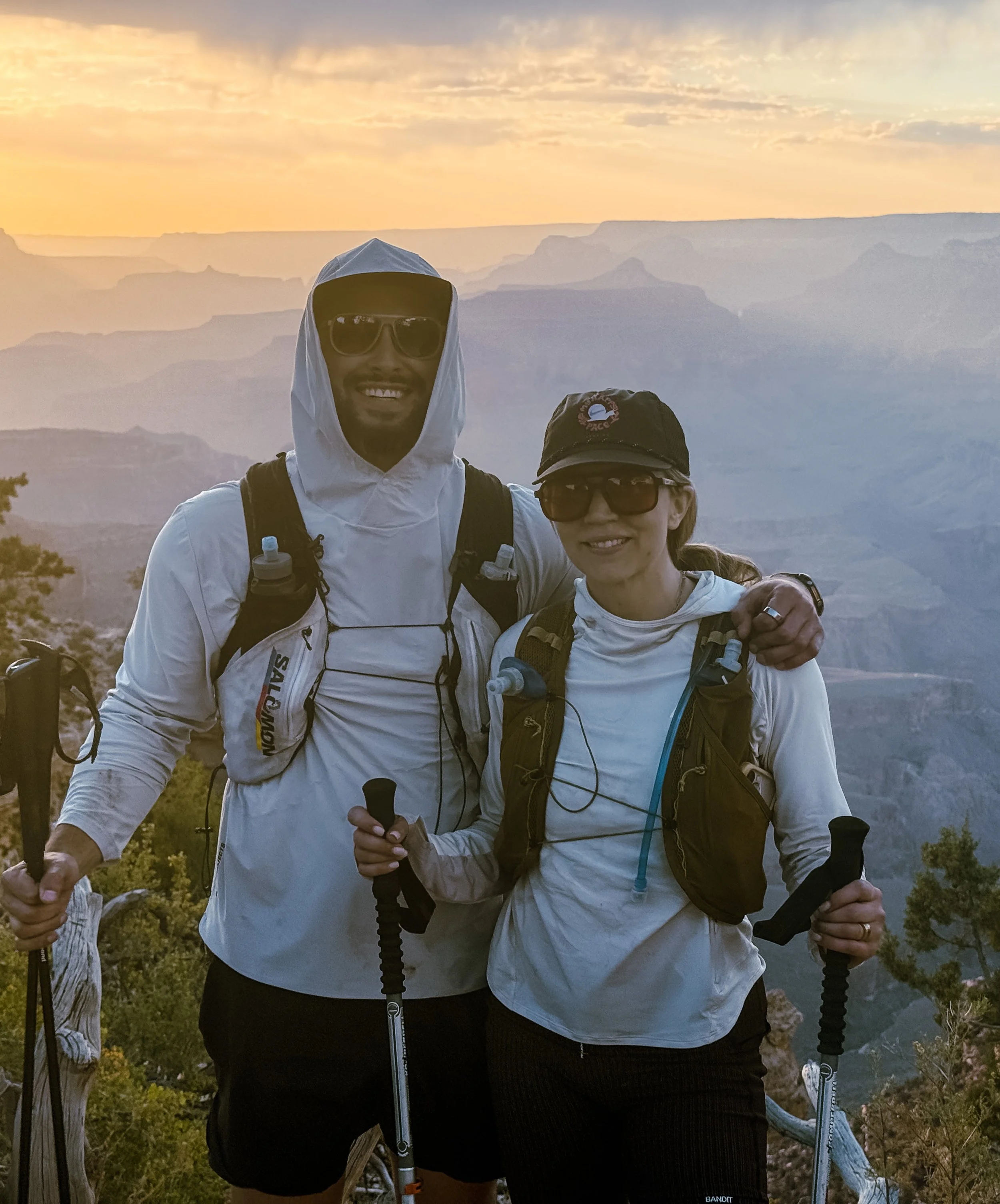
I have come to think that the reason we need to design these big adventures for ourselves, and the reason we need to do them with people we love, is that they are how we rewrite the story. Not the story of the run, but the story of who we are. McAdams was right that the narrative is what does the heavy lifting in a human life, but the narrative gets stale and small if you never give it new material. Comfort quietly erodes the plot, and you start telling yourself the same chapter over and over.
A big day in a big place with people you love is, among other things, a deliberate act of narrative renewal. You step into something hard enough that you will not be the same person on the other side of it. You let a piece of geology that is older than your species put your problems in their proper proportion. And then you walk back to your life carrying a fresh chapter, written in your own legs.
I think gratitude was the through-line for all thirty of us because we had all, in our different ways, just received the same gift. The canyon gave us back to ourselves, slightly rearranged. A little smaller in the ways that needed to be smaller, a little larger in the ways that needed to be larger.
But here is the thing I am sitting with five days out. The gratitude is not the test, it is the doorway. The real test is what happens in the months ahead, when the legs stop hurting and the photos drift down the camera roll and the canyon becomes something I did rather than something I am still inside of. Does this become another check the box experience, a cool story to tell at dinners, a notch on a belt? Or does what the canyon showed us actually take root in how I see myself, how I see Kelly, how I see the people I move through my days with, how I see the natural world that was here long before me and will be here long after? That is the open question, and I do not know the answer yet.
What I do know is that the conditions for the answer are set. We chose the hard thing, we did it with people we love, and we let a place older than our species put our small lives in their proper proportion. The chapter is written, and whether it becomes part of the story we keep telling, or just a single page we flip past on the way to the next thing, is up to us now.
I could be wrong about a lot of this, but I do not think I am wrong about the gratitude or about what it is asking of us. Set the big adventure and invite the people you love and then, let the place do its work on you.
— Mike